From Barrel to Glass: The Art of Aging

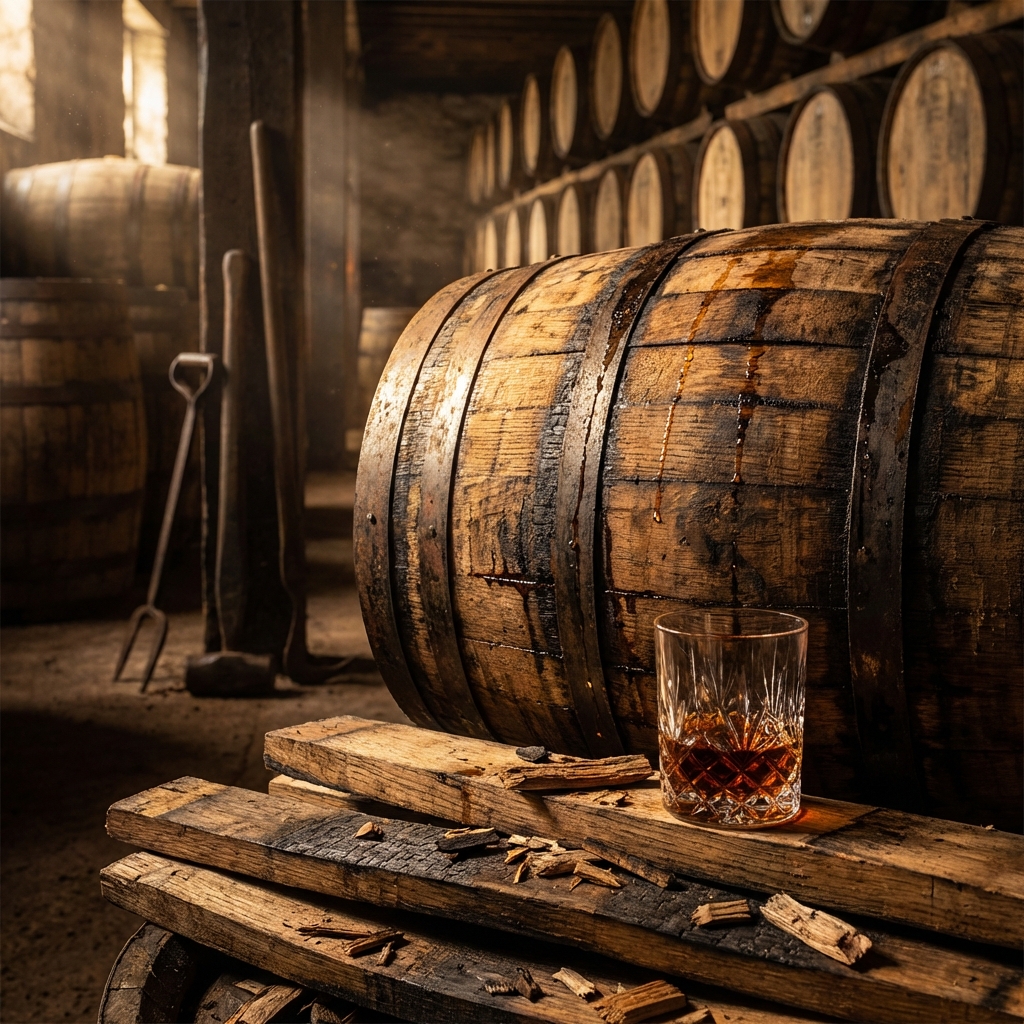
The Magic of Maturation: What Happens in the Barrel
Clear spirit goes into a barrel. Years later, amber liquid comes out—richer, smoother, more complex. What happens in between is pure alchemy.
The Three Processes of Aging
- Extraction: Alcohol pulls compounds from the oak—tannins, lignins, vanillin. These create flavors like vanilla, caramel, spice, and toast.
- Oxidation: Oxygen seeps through the porous wood, reacting with the spirit. This softens harsh notes and creates new flavor compounds.
- Evaporation (The "Angel's Share"): A portion of the spirit evaporates through the wood, concentrating the remaining flavors. In Scotland, this is about 2% per year. In the Caribbean? 10% per year.
The Oak Matters: American vs. European
American White Oak (Quercus alba)
Flavor Profile: Sweet, creamy vanilla, coconut, honey, toffee.
Why: High vanillin content. More porous = faster flavor extraction.
Used For: Bourbon (legally required), Scotch (ex-bourbon casks), Japanese whisky.
European Oak (Quercus robur/petraea)
Flavor Profile: Spicier, richer. Dried fruits, dark chocolate, tannins, structure.
Why: Denser wood, slower extraction, more tannins.
Used For: Sherry casks (Spanish oak), Cognac (French oak).
Bourbon Casks vs. Sherry Casks: The Showdown
Bourbon Casks (Ex-Bourbon Barrels)
Background: US law requires bourbon to be aged in new charred American oak barrels. After one use, these barrels are sold (often to Scotch distilleries).
Flavor Contribution: Vanilla, caramel, coconut, light fruit.
Best For: Lighter, sweeter whiskies. Most common cask type globally (abundant and affordable).
Sherry Casks (Ex-Sherry Butts/Hogsheads)
Background: These casks previously held Oloroso or Pedro Ximénez sherry (fortified wine from Spain).
Flavor Contribution: Rich, dried fruits (raisins, figs), nuts, spice, dark chocolate.
Best For: Complex, luxurious whiskies. More expensive and rarer than ex-bourbon.
The Hybrid: Some whiskies are "finished" in sherry casks—aged in bourbon casks first, then transferred to sherry for the final months/years. This adds a layer of complexity.
The Charring Process: Controlled Fire
Before a barrel is filled, its interior is set on fire for a controlled burn. This "charring" process is critical.
What Charring Does:
- Caramelizes Sugars: Heat breaks down cellulose in the wood, releasing and caramelizing natural sugars. Result: toffee, butterscotch, caramel flavors.
- Creates Activated Carbon: The char layer acts as a natural filter, absorbing sulfur and other undesirable compounds. This smooths the spirit.
- Releases Tannins: Charring opens the wood's structure, allowing tannins to leach out, adding spice and complexity.
- Increases Surface Area: The char creates grooves and ridges, maximizing contact between wood and spirit.
Char Levels (1-4)
- Char #1 (Light): Mellow honey, vanilla.
- Char #2 (Medium): Balanced caramel, toast.
- Char #3 (Medium+): Pronounced vanilla, spice.
- Char #4 ("Alligator Char"): Intense toffee, butterscotch, dark fruit. The wood cracks like alligator skin.
Bourbon almost always uses Char #3 or #4.
Climate Matters: Tropical vs. Temperate Aging
Scotch Whisky (Scotland: Cool, Temperate)
Slow, steady aging. Low evaporation (2%/year). A 12-year Scotch truly spent 12 years in the barrel.
Caribbean Rum (Tropical: Hot, Humid)
Rapid aging. High evaporation (10%/year). A 10-year Caribbean rum can have the complexity of a 20-year Scotch because the heat accelerates extraction and oxidation.
Resources & Community
- World Whisky Day - Annual celebration with global events.
- Redhead Oak Barrels - Educational resource on barrel aging science.
- Local: Join a barrel-aging masterclass via our Events page.
Barrel Aging in Film
The art of aging spirits has captivated filmmakers for decades:
Documentaries & Films
- Neat: The Story of Bourbon (2018): Explores Kentucky's bourbon heritage, distilleries, and the barrel aging process. A love letter to American whiskey.
- Scotch: A Golden Dream (2018): Celebrates Scotland's whisky-making tradition and the master distillers who age spirits to perfection.
- The Angels' Share (2012): Ken Loach's comedy-drama about whisky theft. The title refers to the portion of whisky that evaporates during barrel aging.
- Shackleton's Whisky (National Geographic): The discovery of century-old whisky buried in Antarctic ice. A fascinating look at how extreme cold affects aging.
- Made and Bottled in Kentucky (2003): Chronicles Kentucky bourbon's history, including barrel cooperage and aging warehouses.
Barrel Jokes & Cooperage Comedy
Some aged humor for the connoisseur:
- Q: Why did the barrel go to therapy?
A: It had too much baggage from its past life as a tree! - Q: What do you call a barrel that tells jokes?
A: A real barrel of laughs! - Q: Why are whisky barrels so good at keeping secrets?
A: Because they're tight-lipped! - Q: What did the barrel say to the whisky?
A: "I'll hold you together through thick and thin!" - "Age is just a number... unless you're whisky in a barrel."
- "I'm not old, I'm barrel-aged to perfection."
- "Some improve with age. I improve in a barrel."
- "The angels' share: Proof that even heaven likes a good dram."
Next Steps
Taste two whiskies from the same distillery: one aged in ex-bourbon casks, one in ex-sherry. (Example: Glenfiddich 12 vs. Glenfiddich 15 Solera). You'll taste the difference wood makes.
Julian Cross
Food & Drink EditorJulian writes about spirituality, community, and finding peace in urban life.

Why We Create: The Psychology of Art