

Botany in a Bottle: The Gin Renaissance

From Medicine to Madness: A History in Three Acts
17th Century: Dutch Medicine (Genever)
Gin's story begins not in England, but in the Netherlands. In 1606, the Dutch were already taxing "jenever" (genever)—a juniper-flavored spirit originally used for medicinal purposes. Monks in the 13th century had discovered that juniper berries could preserve medicinal plants through distillation. English soldiers fighting alongside the Dutch in the Thirty Years' War (1618-1648) adopted the spirit for its warming effects, coining the term "Dutch courage."
18th Century: The British Gin Craze
When William of Orange took the English throne in 1688, he slapped heavy taxes on French brandy while encouraging domestic gin production. The result? Catastrophe. By 1730, London had 7,000 gin shops. An estimated 10 million gallons were consumed annually. The poor quality—often laced with turpentine or sulphuric acid—led to addiction, poverty, and crime. Gin earned the nickname "Mother's Ruin." William Hogarth's famous 1751 print, "Gin Lane," captured the horror.
The Gin Act of 1751 finally curbed the crisis by restricting sales to licensed, regulated pubs. It worked. Consumption plummeted, and gin slowly evolved into a respectable spirit.
19th-21st Century: Refinement & Renaissance
In 1830, Aeneas Coffey invented the column still, allowing for cleaner, purer spirits. "London Dry Gin" was born—juniper-forward, crisp, and elegant. The Gin & Tonic became the drink of the British Empire (quinine from tonic water protected against malaria).
Fast-forward to 1999: Hendrick's Gin launched with cucumber and rose botanicals, sparking the modern craft gin movement. Small-batch distillers began experimenting with unique botanicals (citrus, florals, spices), creating gins that were worlds apart from the juniper-heavy classics.
A World of Gin: Types & Countries
London Dry Gin (England)
The global standard. Juniper-dominant, no added sweeteners. Think: Tanqueray, Beefeater, Gordon's.
Genever (Netherlands)
Gin's ancestor. Made with malt wine (like whisky), resulting in a richer, almost grainy spirit. A blend between whisky and gin.
Mediterranean Gin (Spain)
Floral, citrus-forward. Often uses Mediterranean botanicals like rosemary, thyme, and bitter orange.
New Western / Craft Gin (USA, Japan, Scotland)
Juniper takes a back seat. Cucumber, rose, elderflower, even exotic spices dominate. Examples: Hendrick's, Monkey 47, Ki No Bi.
Identifying Botanicals: Taste Like a Pro
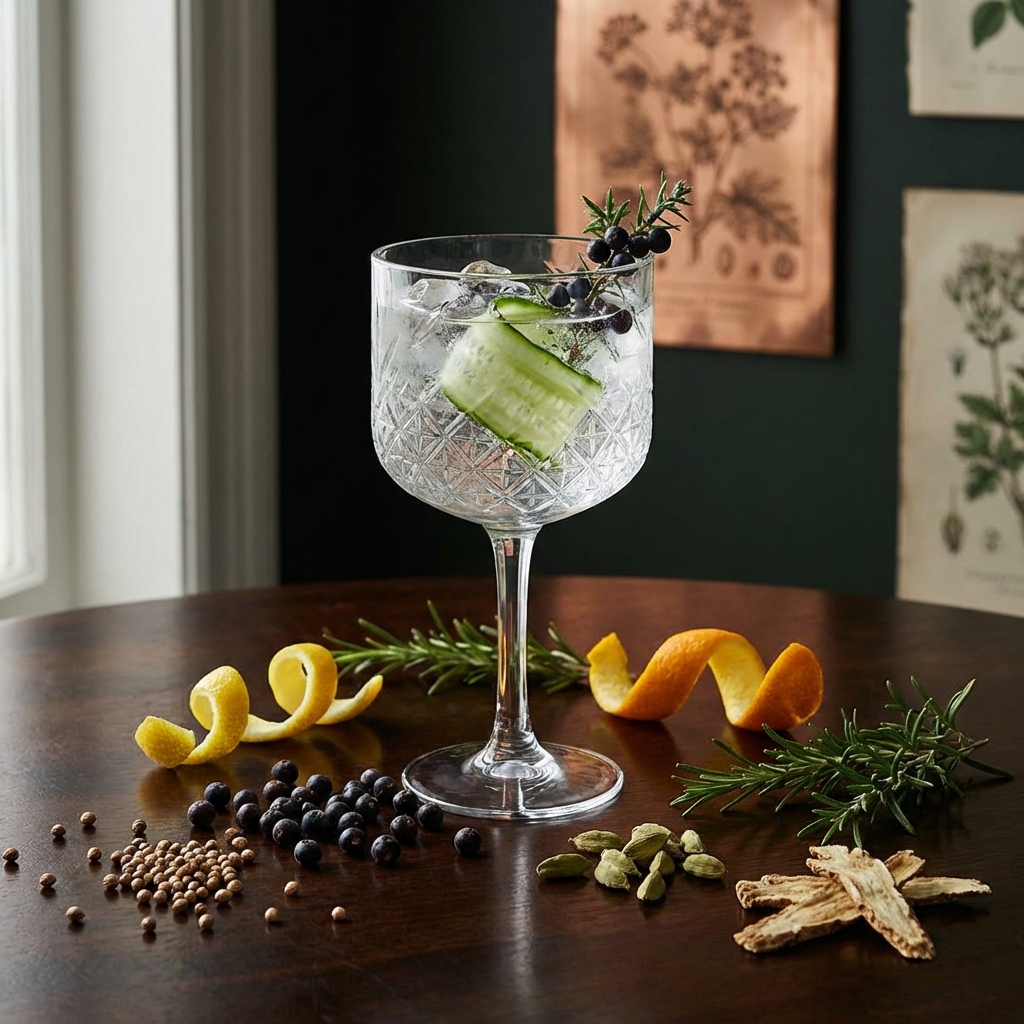
Gin must contain juniper by law, but beyond that, the sky's the limit. Here's how to identify the most common botanicals:
- Juniper: Piney, resinous, slightly bitter. The foundation of any gin.
- Coriander: Citrusy, spicy, warm. Often paired with juniper.
- Angelica Root: Earthy, herbal, slightly woody. Adds depth.
- Orris Root: Floral, powdery, violet-like. A fixative that binds flavors.
- Citrus Peel (Lemon, Orange): Bright, zesty, refreshing.
- Cucumber: Cool, fresh, vegetal (think Hendrick's).
- Rose: Floral, perfumed, delicate.
- Cardamom: Spicy, eucalyptus-like, warming.
Tasting Tip: Pour a small measure neat. Nose it first (don't add water yet). Identify the dominant botanical. Take a tiny sip. Let it coat your tongue. Add a drop of water—watch new botanicals "bloom" as the alcohol softens.
Resources & Community
- The Ginstitute - London-based gin school offering tastings and masterclasses.
- Craft Gin Club - Monthly subscription service discover new craft gins.
- Local: Visit our Events page for gin tasting evenings near you.
Gin in Film & Pop Culture
Gin has been the sophisticated choice in cinema for decades:
Classic Films
- Casablanca (1942): Humphrey Bogart's Rick orders gin, cementing it as the drink of choice for the suave and mysterious.
- The Thin Man Series (1934-1947): Nick and Nora Charles drink martinis (gin, of course) throughout this witty detective series.
- Breakfast at Tiffany's (1961): Audrey Hepburn's Holly Golightly enjoys a gin martini in one of cinema's most iconic scenes.
- M*A*S*H (1970): The doctors of the 4077th distill their own gin in a still they call "The Swamp Still."
Modern Era
- The Spy Who Came in from the Cold (1965): Richard Burton's character drowns his Cold War sorrows in gin.
- Absolutely Fabulous: Edina and Patsy's drink of choice? "Bolly and a gin and tonic, darling!"
- The Queen's Gambit (2020): While whisky features heavily, Beth Harmon also enjoys her fair share of gin martinis.
Gin Jokes & Botanical Banter
Some botanical humor to brighten your day:
- Q: What do you call a sad bottle of gin?
A: De-pressed tonic! - Q: Why did the gin go to therapy?
A: It had too many issues with its tonic relationship! - Q: What's a gin's favorite music genre?
A: Gin and juice! (Sorry, Snoop.) - Q: How do you make a gin and tonic laugh?
A: Give it a little twist! - "I'm not slurring my words, I'm speaking in cursive." - After 3 G&Ts
- "You can't buy happiness, but you can buy gin and that's kind of the same thing."
- "Gin: Because no great story ever started with someone eating a salad."
- "Keep calm and put the kettle on... for a hot gin and honey."
Next Steps
Ready to explore? Head to one of our recommended Cocktail Bars and ask for a "botanical flight"—a tasting of 3-4 gins side-by-side. Your palate will thank you.
Julian Cross
Food & Drink EditorJulian writes about spirituality, community, and finding peace in urban life.
From Barrel to Glass: The Art of Aging
