Portsmouth: Britain's Naval City

Portsmouth: Britain's Naval City
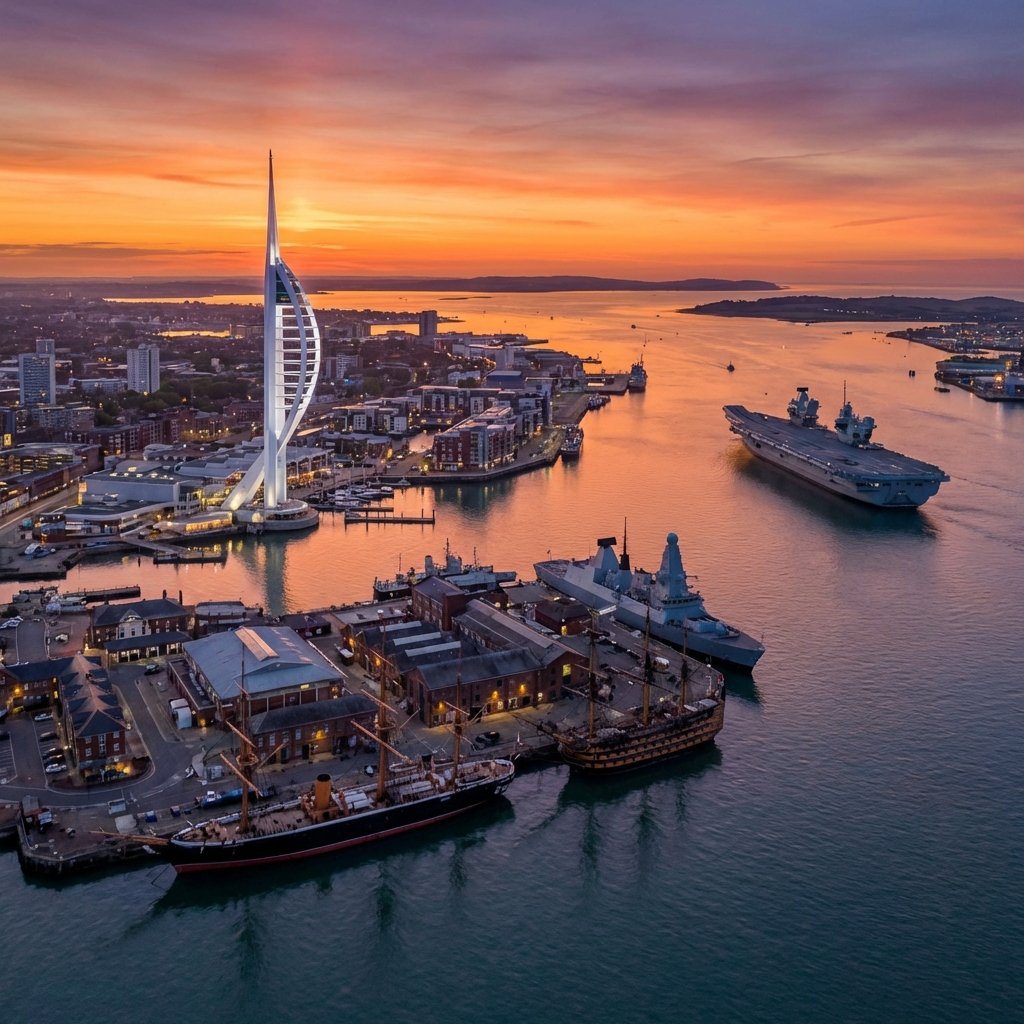
Britain's only island city wears its naval heritage like a uniform. For over 800 years, Portsmouth has been home of the Royal Navy—ships built here won Trafalgar, defended empires, launched D-Day. This isn't museum nostalgia: Portsmouth remains the Royal Navy's largest base, where HMS Queen Elizabeth (Britain's newest aircraft carrier) sits alongside HMS Victory (Nelson's 1765 flagship).
The statistics: 205,000 residents on Portsea Island, 13,000+ military personnel, £14 billion naval contracts, Historic Dockyard attracting 450,000+ annual visitors. But numbers miss Portsmouth's essence: working naval city that happens to preserve 500 years of maritime history, not heritage attraction pretending to be functional.
What makes Portsmouth unique? Active warships share harbor with Tudor flagship Mary Rose, Spinnaker Tower overlooks where D-Day invasion launched, Gunwharf Quays shopping center occupies former naval armaments depot. Past and present collide everywhere—literally HMS Victory's masts visible from Wetherspoons.
This guide explores Portsmouth's naval DNA: Historic Dockyard's world-class warships, Southsea's Victorian seaside charm, D-Day story, Charles Dickens connection, and why this underrated south coast city matters.
Historic Dockyard: Naval History Made Tangible
Three Ships, 500 Years of Naval Power
Portsmouth's Historic Dockyard isn't collection of replica ships or models—these are actual warships that fought, sailed, defined British naval supremacy.
HMS Victory (launched 1765):
- Nelson's flagship at Battle of Trafalgar (1805)
- Oldest commissioned warship in the world (still Royal Navy property)
- Board the gun decks where Nelson died
- See cramped conditions: 800+ crew, hammocks inches apart
- 2,500+ oak trees built this ship
Mary Rose (sank 1545, raised 1982):
- Henry VIII's flagship, sank in Solent during battle with French
- Preserved underwater for 437 years, raised intact
- £35 million museum (2013) displays ship + 19,000 artifacts
- Most complete Tudor warship ever found
- See longbows, medical tools, personal items—Tudor life frozen
HMS Warrior (launched 1860):
- Britain's first iron-hulled armored warship
- Revolutionary: made wooden warships obsolete overnight
- Never fired shot in anger (too intimidating, deterrent)
- Restored to 1860s glory: Victorian engineering masterpiece
Action Stations & Harbour Tours
Action Stations: Interactive Royal Navy experience—flight simulators, climbing walls, exhibits on modern naval operations.
Harbour Tours: 45-minute boat trip past active warships, HMS Queen Elizabeth (when in port), Solent forts, modern naval base.
Full Dockyard ticket: £42 adults, valid 12 months. Worth it—easily full day, possibly two.
Active Naval Base: Still Britain's Naval Heart
HMS Queen Elizabeth: 21st Century Carrier
Britain's largest warship ever built: 65,000 tons, 920 feet long, £3.1 billion cost. Based in Portsmouth, carries F-35B fighter jets, projects British power globally.
When HMS Queen Elizabeth returns to Portsmouth, locals watch from seafront—engineering marvel squeezing through narrow harbor entrance. Symbol of continuity: same harbor that launched Victory now hosts supercarrier.
Portsmouth = Royal Navy HQ
Portsmouth Naval Base covers 300 acres, employs 17,000+ people (military + civilian). It's Britain's:
- Largest naval base
- Surface fleet headquarters
- Ship repair/maintenance hub
- Naval training center
Walk along seafront, you see Type 45 destroyers, Type 23 frigates, support vessels—working navy, not museum.
D-Day: The Invasion Launched Here
June 6, 1944: Portsmouth's Defining Day
On June 6, 1944, 156,000 Allied troops launched from southern England to Normandy beaches. Portsmouth was D-Day's principal embarkation point—troops mustered at Southsea Common, ships gathered in Solent, Eisenhower gave final orders from Southwick House (just north of Portsmouth).
The scale: 7,000 ships, 11,000 aircraft, largest amphibious invasion in history. Portsmouth streets teemed with American, British, Canadian soldiers in days before departure.
D-Day Story Museum
Opened 2018, FREE admission (donations encouraged). Tells D-Day story through Portsmouth lens:
- Overlord Embroidery: 34-panel artwork (longer than Bayeux Tapestry) depicting D-Day
- Personal stories: Letters, oral histories, soldier experiences
- LCT 7074: Original D-Day landing craft (only one surviving in UK)
- Preparation exhibits: How Portsmouth transformed into invasion staging ground
Spinnaker Tower: Modern Maritime Icon
Portsmouth's most distinctive landmark: 170-meter (560-foot) tower shaped like billowing sail. Opened 2005 after construction delays and cost overruns, now beloved city symbol.
Views from top:
- 350° panorama: Isle of Wight, South Downs, Historic Dockyard, Solent
- Glass floor (Sky Walk): Look straight down 100+ meters
- View Deck 1: Indoor, 100m high
- View Deck 2: Outdoor, 110m high
- Sky Deck: External, 105m high, exhilarating
Entry: £12-15 adults. Clear days essential—check weather forecast.
Gunwharf Quays: Naval Armaments to Designer Outlets
Where Royal Navy armaments depot once stored guns, ammunition, weapons, now stands designer outlet shopping center: 90+ stores, waterfront dining, cinema.
The regeneration (2001) transformed derelict naval site into Portsmouth's liveliest quarter. Architecture respects industrial heritage—converted warehouses, preserved cranes, naval references everywhere.
Gunwharf Quays offers:
- Outlet shopping: Nike, Adidas, Gap, etc. (30-70% discounts)
- Waterfront restaurants: Wagamama, Côte, Italian chains
- Spinnaker Tower base: Landmark rises from Gunwharf
- Lively atmosphere: Families by day, dining/drinks at night
Southsea: Victorian Seaside Elegance
Pier, Common, and Promenade
Southsea—Portsmouth's seaside district—offers Victorian resort charm:
Southsea Common: Massive green space along seafront, D-Day memorials, kite flying, events, festivals.
Clarence Pier: Amusement arcade, rides, fish and chips, traditional seaside fun (slightly faded glory).
Southsea Castle (built 1544 by Henry VIII): FREE entry, coastal defense fort, views across Solent to Isle of Wight.
Palmerston Road: Independent shops, cafes, vintage stores, bohemian vibe.
The Hovercraft Connection
Portsmouth-to-Isle of Wight hovercraft service operated 1965-2016 (world's longest-running commercial hovercraft route). Service discontinued, but Hovercraft Museum (nearby Lee-on-Solent) preserves history.
Charles Dickens: Portsmouth's Literary Son
Birthplace: 393 Old Commercial Road
Charles Dickens (1812-1870), Britain's greatest Victorian novelist, was born in Portsmouth on February 7, 1812. His father worked at Navy Pay Office (typical Portsmouth employment).
The family left Portsmouth when Charles was young, but the city claims him proudly.
Charles Dickens Birthplace Museum:
- Regency townhouse restored to 1812 appearance
- Period furnishings, Dickens family artifacts
- £5 entry
- Small but charming—literary pilgrimage site
Fratton Park: Football Heritage
Portsmouth FC—"Pompey" to fans—plays at Fratton Park (opened 1898), one of England's oldest stadiums. The club's history is rollercoaster:
- Two FA Cups (1939, 2008)
- Premier League (2003-2010)
- Financial collapse (2010), administration, relegations
- Community buyout (2013): Fan-owned club
Portsmouth fans are fiercely loyal—19,000 capacity Fratton Park still intimidating atmosphere. The rivalry with Southampton (30 miles away) is one of England's fiercest derbies.
Getting There & Around
Train: Portsmouth & Southsea / Portsmouth Harbour (90 mins from London Waterloo, direct from Brighton, Southampton)
Ferry:
- Isle of Wight: Wightlink (20 mins from Portsmouth to Fishbourne)
- France: Brittany Ferries to Caen, St Malo, Le Havre
- Spain: Brittany Ferries to Santander, Bilbao
Local transport:
- Walking: Historic Waterfront area walkable
- Buses: Good network, day ticket £5
- Waterbus: Ferries between Gunwharf, Historic Dockyard, Gosport
- Cycling: Flat island, seafront cycle paths
Practical Tips
- Historic Dockyard: Buy ticket online (cheaper), arrive early (easily full day)
- Weather: Coastal = windy, bring jacket even in summer
- Isle of Wight day trip: Easy from Portsmouth, 20-min ferry
- Avoid: International Navy base opening days (massive crowds)
- Budget: Dockyard is pricey (£42), but D-Day Story + museums FREE
- Seafood: Eat fish and chips on Southsea seafront
- Naval jargon: Locals use naval terms ("heads" = toilets, "galley" = kitchen)
Why Portsmouth Matters
Portsmouth could easily be maritime theme park—Disney-fy the naval heritage, sanitize history, chase tourist pounds. Instead, it remains working naval city where past coexists with present.
What makes Portsmouth essential? 500+ years continuous naval history visible in single harbor, ships you can board (not just view), D-Day story told from launch point, active warships reminding you this isn't museum, and Victorian seaside offering traditional British coastal charm.
This isn't prettified heritage city or artificially regenerated waterfront. Portsmouth is real: navy town that happens to preserve extraordinary history because that history never stopped being relevant.
The city where Nelson departed for Trafalgar, where D-Day launched, where HMS Queen Elizabeth berths today—Portsmouth's naval story continues. Visit while it's still authentic.
References & Resources
Essential websites:
Attractions:
Culture & Heritage:
Transport:
Timothy Canon
History & Literature CriticTimothy writes about history, literature, and the cultural threads that connect past and present.