The ZX Spectrum: A British Computing Legend and Its Enduring Legacy

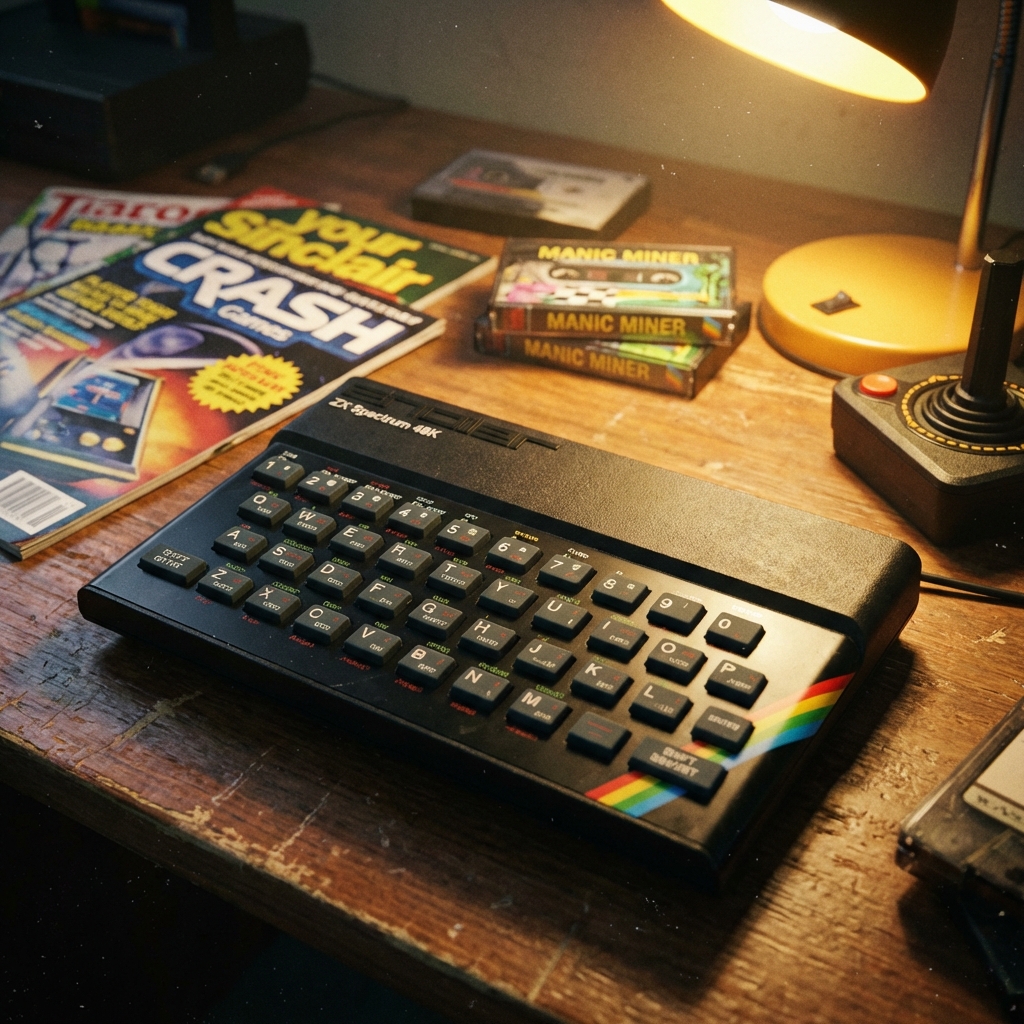
The Dawn of Home Computing
In April 1982, Sir Clive Sinclair's company launched a computer that would define a generation of British programmers and gamers: the ZX Spectrum. Priced at just £125 for the 16KB model (£175 for 48KB), it brought computing into ordinary homes across the UK when competitors cost thousands of pounds.
The "Speccy," as it was affectionately known, wasn't just a product—it was a cultural phenomenon that ignited the British gaming industry, inspired countless careers in technology, and created a community that remains passionate over 40 years later.
Technical Specifications: Revolutionary for Its Time
The Original ZX Spectrum (1982)
- Processor: Zilog Z80A CPU running at 3.5 MHz
- Memory: 16KB or 48KB RAM
- Display: 256×192 pixels, 8 colors (though only 2 colors per 8×8 pixel block due to "color clash")
- Sound: Single-channel beeper
- Storage: Standard cassette tapes (loading times: 3-5 minutes typical)
- Keyboard: Rubber "dead flesh" keys (later models featured plastic keys)
- Price: £125-£175 (equivalent to £500-£700 today)
Later Models
- ZX Spectrum+ (1984): Improved keyboard, same internals
- ZX Spectrum 128K (1985): 128KB RAM, improved sound chip (AY-3-8912), built-in keypad
- ZX Spectrum +2 (1986): Built-in cassette recorder
- ZX Spectrum +3 (1987): Built-in 3-inch floppy disk drive
Cultural Impact: How the Spectrum Changed Britain
The Bedroom Coders Revolution
The Spectrum democratized programming. Its built-in BASIC interpreter meant anyone could start coding immediately after switching it on. Teenagers in bedrooms across Britain created games, utilities, and demos—many selling their creations to major publishers.
Matthew Smith created Manic Miner aged 17. The Oliver Twins (later of Dizzy fame) started as teenagers. Elite's David Braben was 19 when he co-created Elite. The Spectrum created an entire generation of programmers who would go on to shape the global gaming industry.
The Gaming Revolution
The Spectrum hosted thousands of games across every genre:
- Platformers: Manic Miner, Jet Set Willy, Dizzy series
- Adventures: The Hobbit, Heavy on the Magick
- Arcade Conversions: Pac-Man, Space Invaders, OutRun
- Innovative Originals: Elite (3D space trading), Knight Lore (isometric 3D), Lords of Midnight
- Text Adventures: The entire Magnetic Scrolls library
The Magazine Scene
Publications like CRASH, Your Sinclair, and Sinclair User became cultural institutions, featuring reviews, type-in listings, and posters. These magazines fostered a sense of community and shared passion for the platform.
Why It Mattered: The Spectrum's Lasting Legacy
Educational Impact
Schools across Britain adopted the Spectrum, introducing computer science to the curriculum. Millions learned their first programming on a Speccy, with many going on to careers in technology, gaming, and software development.
The British Gaming Industry
Companies founded during the Spectrum era—Rare, Codemasters, Gremlin Graphics, Ultimate Play the Game—grew into major players. Many modern game developers cite the Spectrum as their inspiration and training ground.
Creative Freedom
With limited resources (48KB of RAM!), developers had to be creative. The constraints bred innovation—developers invented techniques like sprite multiplexing, interrupt-driven music, and compression algorithms that influenced computing beyond gaming.
The Modern Retro Computing Scene
Emulation: Play Spectrum Games Today
Modern emulators let you experience the Spectrum on contemporary hardware:
- Fuse: Highly accurate, cross-platform emulator. Available for Windows, Mac, Linux.
- ZEsarUX: Feature-rich emulator supporting multiple Sinclair machines.
- Spectaculator: Popular Windows emulator with excellent debugger.
- RetroArch: Multi-system emulator including Spectrum cores, available on virtually every platform.
- Online Emulators: Websites like JSSpeccy let you play in your browser instantly.
New Hardware: Modern Spectrum Experiences
The retro computing community has created amazing new hardware:
ZX Spectrum Next
A modern reimagining funded via Kickstarter, the Spectrum Next is FPGA-based hardware that's 100% compatible with original software while adding modern features:
- 1024 colors on screen, 512×192 resolution modes
- 8MB RAM, SD card storage
- HDMI output, USB keyboard support
- Enhanced audio, sprite engine
- Backward compatible with all original Spectrum software
Other Modern Hardware
- ZX-Uno: FPGA recreation in a compact form factor
- Pentagon: Russian clone with enhanced capabilities
- Harlequin: DIY recreation using modern components
- Raspberry Pi Solutions: Various projects turning Pis into Spectrum replicas
New Software in 2024-2026
Incredibly, developers continue releasing new Spectrum games:
- Modern Homebrew: New games created using period-accurate tools or modern cross-compilers.
- Game Jams: Annual competitions like Yandex Retro Games Battle produce innovative new titles.
- Commercial Releases: Companies like Bitmap Soft publish new physical releases with cassette tapes and professional packaging.
- Remakes & Demakes: Modern games reimagined for Spectrum hardware constraints.
The Thriving Retro Computing Community
Online Communities
- World of Spectrum: The definitive archive of Spectrum software, documentation, and hardware information. Over 40,000 titles preserved.
- Spectrum Computing: Modern community site with news, forums, and downloads.
- ZX Spectrum Facebook Groups: Active communities sharing memories, technical help, and discoveries.
- r/ZXSpectrum: Reddit community with 15,000+ members discussing all things Speccy.
- Discord Servers: Real-time chat for retro gaming enthusiasts, development help, and socializing.
Physical Meetups & Events
- Play Expo: Annual retro gaming expo featuring Spectrum displays and competitions
- Revival Events: Regional gatherings of Spectrum enthusiasts
- Retro Computing Clubs: Local groups meeting to share hardware, play games, and swap stories
- Museum Exhibitions: Computing museums regularly feature Spectrum displays and workshops
Check our Events page for retro computing meetups in your area!
YouTube & Video Content
- RMC - The Cave: Neil's channel features Spectrum repairs, reviews, and nostalgia
- Stuart Ashen: Reviews of obscure Spectrum peripherals and games
- Kim Justice: Deep dives into British gaming history
- Nostalgia Nerd: Spectrum hardware analysis and modifications
Getting Started with Spectrum Computing Today
For Beginners: Emulation
- Download an Emulator: Start with Fuse or try JSSpeccy in your browser
- Get Some Games: World of Spectrum hosts legal downloads of thousands of titles
- Try the Classics: Start with Manic Miner, Jet Set Willy, Knight Lore, or Elite
- Learn BASIC: Type in short programs from online tutorials to understand how it worked
For Hardware Enthusiasts
- Buy Original Hardware: Working Spectrums still sell on eBay (£50-£200 depending on condition)
- Modern Replacements: Consider ZX Spectrum Next or recreations if originals are too expensive
- Repairs & Servicing: Active community offering repair services for vintage machines
- Peripherals: DivMMC interfaces provide SD card storage for real hardware
For Aspiring Developers
- Learn Z80 Assembly: The original way to create games, still the most powerful
- Modern Tools: Z88DK (C compiler), Boriel's ZX BASIC (modern BASIC compiler)
- Graphics Tools: SevenuP (sprite editor), Screen$ (screen design)
- Music Tools: BeepFX, Vortex Tracker
- Tutorials: Jonathan Cauldwell's books teach game creation step-by-step
The Future: What's Next?
The Spectrum scene shows no signs of slowing:
- ZX Spectrum Next: Continued software development exploiting its enhanced capabilities
- Preservation: Ongoing efforts to archive lost games, magazines, and documentation
- Education: Spectrum's simplicity makes it perfect for teaching programming fundamentals
- Nostalgia Market: Official Spectrum-branded merchandise and mini replicas
- Cross-Generational Appeal: New fans discovering the platform through documentaries and YouTube
References & Resources
Essential Websites
- World of Spectrum: Complete Software Archive
- Spectrum Computing: Modern Community Hub
- ZX Spectrum Next: Official Site
- Fuse Emulator: Free Cross-Platform Emulator
- JSSpeccy: Browser-Based Emulator
Books
- "The ZX Spectrum Book" by Andrew Rollings: Comprehensive history and technical reference
- "Grand Thieves & Tomb Raiders" by Magnus Anderson & Rebecca Levene: British gaming industry history
- "Coding the ZX Spectrum" by Jonathan Cauldwell: Modern guide to Spectrum game development
- "The Spectrum Show" by Paul Jenkinson: Collection of interviews with industry figures
Documentaries
- "Micro Men" (BBC, 2009): Drama about Sinclair vs. Acorn rivalry
- "From Bedrooms to Billions": Documentary series covering British gaming
- "The Rubber Keyed Wonder" (YouTube): Fan-made deep dive into Spectrum culture
Social Media & Forums
- r/ZXSpectrum: Active Reddit Community
- ZX Spectrum Facebook Groups
- Twitter/X: Follow #ZXSpectrum for daily nostalgia and news
Join the Community
The ZX Spectrum community welcomes newcomers with open arms. Whether you're reliving childhood memories or discovering retro computing for the first time, there's a place for you. The spirit of the bedroom coders lives on—it's never been easier to create for the Spectrum, and the community is eager to help.
From emulation to original hardware, from playing classics to creating new games, the ZX Spectrum remains a vibrant, creative scene. The little rubber-keyed computer that could has secured its place in computing history—and its future looks bright.
LOAD "" and press PLAY on nostalgia. The Spectrum awaits.
Julian Cross
Games & Strategy WriterJulian brings analytical thinking and community gaming experience to help newcomers master classic games.