

Nottingham: Beyond Robin Hood

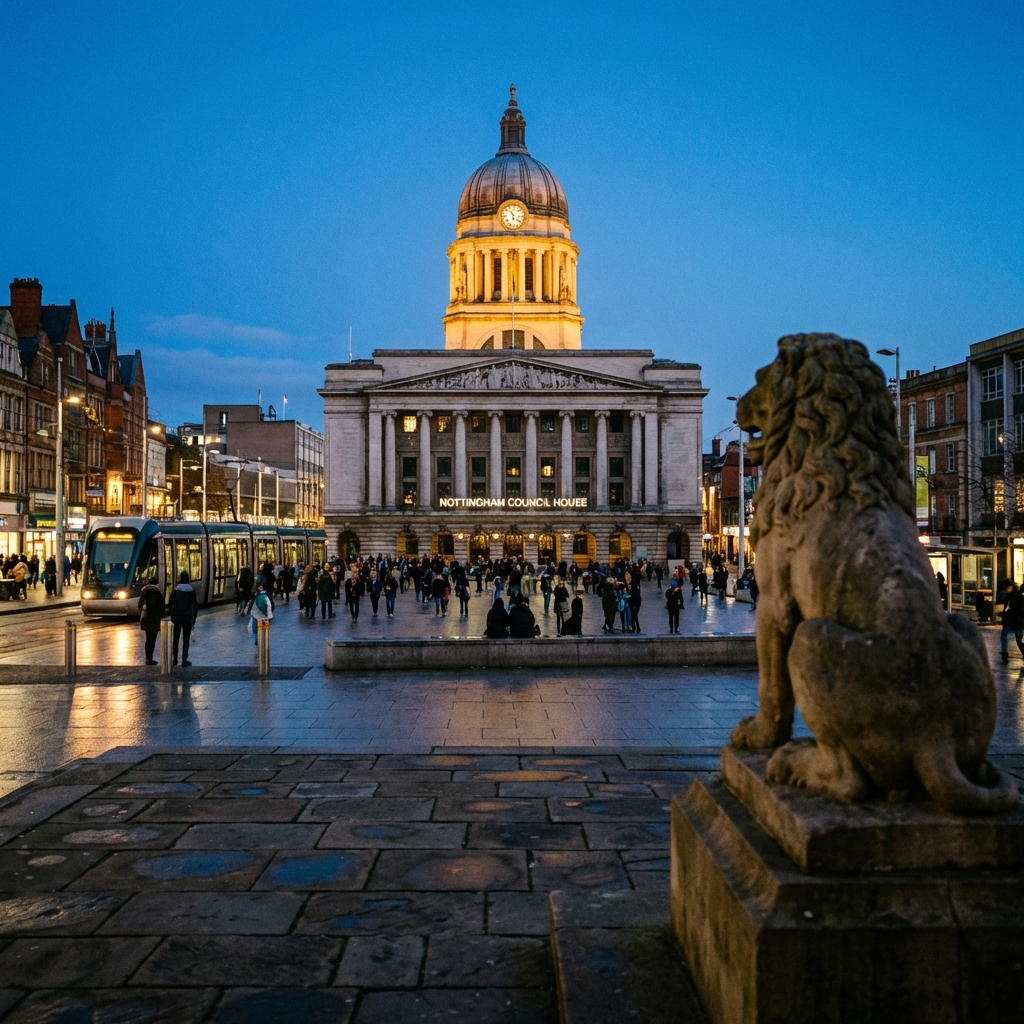
Nottingham: Beyond Robin Hood
Yes, Robin Hood brings the tourists—bow-and-arrow statues, themed pubs, castle tours. But Nottingham's real story lies beneath your feet: over 800 sandstone caves tunneling beneath the city, hiding medieval tanneries, Victorian beer cellars, WWII air-raid shelters carved from rock.
Above ground? Victorian lace capital that dressed the world's elite, music venue that hosted Nirvana before grunge broke big, literary heritage spanning Byron to DH Lawrence, and 60,000+ students keeping this city perpetually young. Nottingham is far more interesting than its Sheriff-and-outlaw tourist marketing suggests.
The numbers: 323,000 residents (metro: 730,000), £9.2 billion economy, two universities creating permanent youth culture, UNESCO City of Literature designation, England's oldest pub (Ye Olde Trip to Jerusalem, 1189 AD), and those 800+ caves making Nottingham literally unique in Britain.
This guide explores Nottingham beyond Robin Hood: the underground city, lace-making heritage, music scene that broke Arctic Monkeys, literary giants, and why this overlooked East Midlands city deserves recognition.
City of Caves: Nottingham's Underground Secret
Over 800 Caves Beneath Your Feet
Walk through Nottingham and you're walking on Swiss cheese. Over 800 man-made caves riddle the sandstone beneath the city—more than any other UK city. Why? Soft sandstone = easy to carve. For 1,000+ years, Nottingham residents dug underground for storage, brewing, tanning, shelter.
Cave uses through history:
- Medieval: Tanneries (leather production), storage cellars
- Victorian: Brewery cellars, slum dwellings (illegal but happened)
- WWII: Air-raid shelters protecting 35,000+ people
- Modern: Wine storage, venues, tours
City of Caves Tour
The City of Caves attraction (beneath Broadmarsh Shopping Centre) reveals medieval tannery caves, Victorian slum dwellings, WWII shelters. You descend beneath modern city to discover:
- Tannery caves: Where medieval craftsmen soaked animal hides
- Pilgrim's Cave: Used by Crusaders before departing
- Air-raid shelters: Carved 1939, benches still in place
- Victorian slums: Multi-story cave dwellings (horrific conditions)
Entry: £7.50, 45-minute guided tour. Eerie, fascinating, uniquely Nottingham.
Other Cave Attractions
- Ye Olde Trip to Jerusalem: England's oldest pub (1189), carved into castle rock, cave bar
- Mortimer's Hole: Secret tunnel beneath Nottingham Castle
- Nottingham Castle caves: Medieval defenses, dungeons
- Galleries of Justice: Court building with cave cells beneath
Lace Capital of the World
From Cottage Industry to Global Domination
By 1850s, Nottingham was world capital of lace-making. The invention of lace-making machines (1809: John Heathcoat's bobbin net machine) industrialized what was previously hand-craft. Nottingham's 150+ factories produced lace for:
- Royal weddings: Queen Victoria's dress (1840), Princess Diana's (1981)
- High fashion: Parisian couture houses
- Global elite: Lace exports to every continent
At peak (1900s), 25% of Nottingham workers worked in lace industry.
The Lace Market
Nottingham's Lace Market quarter preserves Victorian warehouse district. Red-brick buildings with iron frames, huge windows (for light), loading bays—these warehouses stored and distributed lace worldwide.
Today: converted to apartments, bars, independent shops, creative businesses. The architecture remains stunning—best-preserved Victorian industrial quarter outside Manchester/Glasgow.
Lace Market highlights:
- St Mary's Church: 15th-century, overlooks Lace Market
- Adams Building: Ornate Victorian warehouses
- Independent cafes/bars: Trendy without being pretentious
- Nottingham Contemporary: Art gallery in modernist building
Music City: From Rock City to Sleaford Mods
Rock City: Legendary Venue
Rock City (opened 1980) is Nottingham's most important venue. 2,100 capacity, great acoustics, sweaty basement feel despite size. Every major alternative act played here on their rise:
- Nirvana (1991): Played to 150 people, months before "Nevermind" broke
- Oasis: Multiple legendary shows
- Arctic Monkeys: Breakthrough tour dates
- Manic Street Preachers, Radiohead, Blur: All cut teeth here
Why does Rock City matter? It's big enough to host major tours, small enough to feel intimate, cheap enough for breaking bands. The wall of fame (bands who played here) reads like alt-rock history.
Sleaford Mods: Nottingham's Voice
Sleaford Mods—Jason Williamson (vocals) and Andrew Fearn (beats)—are Nottingham's most vital musical export since the 2000s. Their minimal electronic punk gives furious voice to working-class rage, austerity Britain, post-industrial alienation.
Williamson's Nottingham accent stays unfiltered—council estates, job centres, crap jobs. They reject music industry polish, record in bedrooms, tour relentlessly. Critics call them "most important British band of 2010s"—divisive but undeniable.
DIY & Alternative Scene
Nottingham's music scene thrives in grassroots venues:
- Rescue Rooms: 450 capacity, indie/alternative
- The Bodega: 200 capacity dive bar, punk/indie
- Metronome: New music venue, 1,600 capacity
- DHP Family: Local promoters running venues nationwide
60,000+ students (two universities) ensure constant demand for live music, cheap gigs, new bands forming constantly.
Literary Heritage: Byron to Lawrence
Lord Byron (1788-1824)
Romantic poet Lord Byron inherited Newstead Abbey (6 miles north of Nottingham) at age 10. Though the estate was ruined, Byron spent childhood there, drawing on Nottinghamshire landscapes for poetry.
Today: Newstead Abbey (house & gardens) open to public, Byron museum, beautiful grounds. Worth the trip if you're Byron-curious.
DH Lawrence (1885-1930)
DH Lawrence—controversial novelist, poet—grew up in Eastwood (Nottinghamshire), son of coal miner. His novels ("Sons and Lovers", "Lady Chatterley's Lover") drew heavily on Nottinghamshire working-class life, mining communities, industrial landscapes.
Lawrence's writing captured class tensions, sexual awakening, escape from provincial England—themes still resonating. His birthplace museum preserves working-class Victorian life.
Alan Sillitoe (1928-2010)
Alan Sillitoe gave voice to post-war Nottingham working class. His novel "Saturday Night and Sunday Morning" (1958) and short story "The Loneliness of the Long Distance Runner" depicted working-class anger, factory life, rebellion against authority.
Film adaptations (both starring Albert Finney) cemented Nottingham's literary reputation.
UNESCO City of Literature
2015: Nottingham earned UNESCO City of Literature designation (one of only 39 globally). Recognition of literary heritage, active writing community, support for emerging writers.
Student City: 60,000 Strong
Two Universities, Perpetual Youth
University of Nottingham (22,000 students): Russell Group, beautiful parkland campus, international reputation
Nottingham Trent University (38,000 students): City-center campus, art/design/media strengths
Combined 60,000+ students = 18% of city population. Impact:
- Vibrant nightlife: Cheap pubs, club nights, live music
- Young demographics: City feels energetic, not declining
- Cultural demand: Venues, cinemas, events thrive
- Economic boost: £1 billion+ student spend annually
Student Neighborhoods
- Lenton: Terraced houses, student dives, cheap living
- Beeston: Quieter, families + students mix
- Dunkirk: Traditional student area
- City center: Student accommodation towers
Nottingham Castle & Robin Hood
Addressing the Elephant (or Outlaw)
Yes, Robin Hood. Nottingham markets him relentlessly—statue in Old Market Square, castle tours, themed pubs. But here's the truth: Robin Hood probably didn't exist, and if he did, connection to Nottingham is tenuous (Sherwood Forest yes, Nottingham less clear).
Nottingham Castle (reopened 2021 after £30m refurb):
- Ducal palace (1674), not medieval fortress (original destroyed 1651)
- Art gallery, Robin Hood exhibitions
- Cave tours beneath castle rock
- Great views across Nottingham
Robin Hood sells tickets, but Nottingham's real stories—caves, lace, literature, music—are more compelling.
Getting There & Around
Train: Nottingham Station (1.5-2 hours from London, 30 mins from Derby, 2 hours from Manchester)
Tram: Nottingham Express Transit (NET)—two lines connecting city center to suburbs, £2.60 single
Bus: Extensive network, cheaper than most cities
Walking: Compact city center, most attractions within 20-minute walk
Cycling: Flat terrain, improving infrastructure
Practical Tips
- Avoid: Hyson Green/Radford at night (rough areas)
- Best bases: Lace Market (trendy), Hockley (independent), West Bridgford (affluent)
- Budget: Very affordable—food, drink, accommodation cheaper than Manchester/Leeds
- Student timing: Avoid October/January term starts (accommodation tight)
- Cave tours: Book ahead, popular with school groups
- Local slang: "Duck" = term of endearment (not gender-specific)
Why Nottingham Matters
Nottingham could coast on Robin Hood tourism—sell medieval fantasy, ignore real history, become theme park. Instead, it built on genuine strengths: unique cave architecture, industrial heritage, music scene, literary pedigree, student energy.
The city's best feature? It doesn't take itself too seriously. Yes, there's a Robin Hood statue. But locals know the real Nottingham is underground caves, Sleaford Mods' angry poetry, DH Lawrence's working-class novels, Rock City's sweaty gigs, Victorian lace warehouses converted to craft beer bars.
This is England's most underrated city—overshadowed by Manchester, Birmingham, Leeds, but quietly offering culture, affordability, authenticity those bigger cities sometimes lack.
Visit for Robin Hood if you must. Stay for everything else.
References & Resources
Essential websites:
- Visit Nottinghamshire: Official tourism
- Nottingham City Council: Events, info
- UNESCO City of Literature
Attractions:
Music & Nightlife:
Transport:
Ruth Naomi
Community & Lifestyle LeadRuth is passionate about uncovering the stories that connect communities and celebrate local culture.
