Northern Joy: Jo Whiley and the 90s Revival

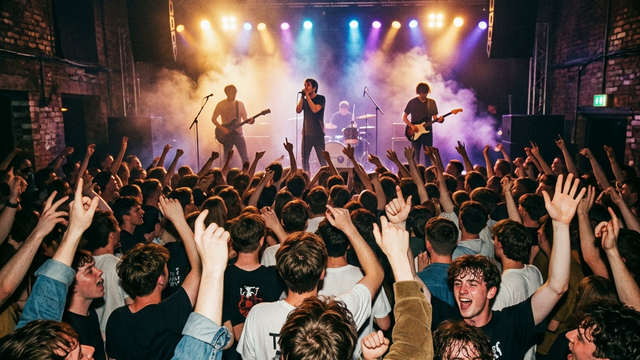
Cast your mind back to 1994. Blur and Oasis are at war on the charts. Liam Gallagher is sneering at the nation. Jo Whiley is on Radio 1, breathlessly playing Elastica back-to-back with Massive Attack, and an entire generation is discovering what it means for music to feel urgent, alive, and undeniably ours. Now, in 2026, those same songs are filling arenas again — and the North of England is leading the revival.
The 90s aren't a nostalgia act. They're a movement. From sold-out "daytime disco" events in Manchester to Britpop anniversary tours packing venues from York to Newcastle, Britain's love affair with the decade that gave us Oasis, Pulp, The Verve, and the Haçienda is experiencing a full-blown second coming. And at the centre of it all — weaving past and present together with the warmth of someone who genuinely lived every moment of it — is Jo Whiley.
Jo Whiley: The Voice of a Generation, Still Broadcasting
Jo Whiley began her broadcasting career at Radio 1 in 1993, arriving just in time to soundtrack the most explosive era in British pop music. Over the next decade she would interview Oasis in their Burnage living room, stand on the Pyramid Stage at Glastonbury as Kurt Cobain's death was announced, and play records that would define a generation's formative years. When she moved to Radio 2 in 2011, she brought that passion with her — and her audience followed.
Her '90s Anthems' live shows — which have toured the UK since 2022 — are not straightforward DJ sets. Whiley curates them like extended radio programmes: telling stories between tracks, sharing memories of recording sessions and backstage encounters, and inviting guest performers who lived the decade firsthand. When she played the Albert Hall in Manchester in late 2025, tickets sold out in under an hour. The York Barbican date that followed was no different.
"People don't come just for the music," Whiley told BBC Radio 2 in January 2026. "They come because those songs were the soundtrack to the most important moments of their lives. First loves, first jobs, first proper nights out. The 90s gave people a sense of belonging that I think a lot of us are still searching for."
Why Now? The Cultural Conditions for a 90s Revival
The 30-Year Rule
Cultural revivals tend to follow a rough 30-year cycle. The 50s came back in the 80s (via rockabilly and American Graffiti nostalgia). The 60s returned in the 90s (Britpop was explicitly Mod-influenced). The 80s had its moment in the 2010s (synthwave, Stranger Things, New Order reissues). Right on schedule, the 90s are here — and they've arrived with a vengeance. The generation that was 18-25 during Britpop's peak (1994-1997) is now in their mid-40s to early 50s: old enough to feel nostalgic, young enough to want to dance.
Streaming Is Surfacing Lost Catalogues
The streaming era has been unexpectedly kind to 90s British music. Oasis's "Definitely Maybe" (1994) — the fastest-selling debut album in UK chart history at the time, shifting 100,000 copies in its first week — has accumulated over 2 billion streams globally. When the Gallaghers announced their 2025 reunion tour, Spotify reported a 600% spike in Oasis streams overnight. Younger listeners, discovering songs their parents played on cassette, are now filling the same arenas their parents did thirty years ago.
The Reaction to Digital Overload
There's also something deeper at play. The 90s existed on the cusp of the digital age — it was the last decade when music felt truly physical and communal. You heard a song on the radio, queued at Our Price to buy the single, and argued about it on the bus. The internet hadn't yet fragmented culture into a million micro-niches. In an age of algorithm-driven playlists and infinite scroll, that version of shared culture feels profoundly appealing.
The Britpop Flashpoints: A Northern Story
Manchester and the Madchester Inheritance
The story of 90s British music cannot be told without Manchester. The decade began with the tail-end of Madchester — the late-80s collision of indie guitar and acid house that the Haçienda nightclub had been incubating since 1982. By 1990, bands like The Stone Roses and Happy Mondays had exported that sound to the world. When that scene burned out, it left a city culturally primed for what came next.
Oasis burst from Burnage in 1991. By August 1995, they were at the centre of the most famous chart battle in British pop history. Their single "Roll With It" went head-to-head with Blur's "Country House" in a single week — Blur won, shifting 274,000 copies to Oasis's 216,000, but both bands hit the top two simultaneously, with every newspaper in Britain treating it as a national event. It was, for a brief, glorious moment, the most important thing happening in the country.
Sheffield's Pulp and the Other Side of the Coin
While Manchester generated the swagger, Sheffield's contribution was sharper and stranger. Pulp, led by the irreplaceable Jarvis Cocker, had been releasing records since 1983 with minimal mainstream success. Then "Common People" (1995) turned them into the spokesmen for a generation of working-class kids who felt excluded from the glossy Britpop dream. The song — built around Cocker's encounter with a wealthy Greek student who wanted to "live like common people" — reached number 2 in the UK charts and was voted the greatest Britpop song of all time in a 2024 BBC poll.
The Verve and the North's Emotional Register
From Wigan came The Verve, whose 1997 album "Urban Hymns" became one of the best-selling British albums of all time, with over 7 million copies sold worldwide. "Bitter Sweet Symphony" — built around a sample from an Andrew Loog Oldham orchestral version of a Rolling Stones track — reached number 2 in the UK (controversially blocked from number 1) and became an anthem of restless, searching youth. Richard Ashcroft's voice, full of yearning and defiance, felt like it could only have come from the North.
The Daytime Disco Revolution
One of the most interesting aspects of the 2026 revival isn't happening in traditional club spaces — it's happening in the afternoon. Daytime discos, typically running from 2pm to 6pm, are selling out theatres and arts centres across the North, drawing crowds of 40 and 50-somethings who want to dance to the music they love without the 2am finish, the queues, and the morning-after consequences.
Events like Buttoned Down Disco, Mostly 90s, and Marvellous (all running regular Northern dates in 2026) report consistent sell-outs. Promoters note that the demographic skews 38-55, is predominantly female, and is willing to spend significantly on tickets and experiences. This isn't people clinging to the past — it's people with busy lives and disposable income demanding the music they grew up with on their own terms.
Manchester's Albert Hall, housed in a former Methodist chapel and one of the most celebrated live venues in the North, hosts regular 90s-themed events that sell out within hours of announcement. In Leeds, the O2 Academy and Headrow House both programme monthly retro nights. In Newcastle, Digital runs its 90s Reloaded nights to consistent capacity crowds.
The Soundtrack: Essential 90s Albums You Need to Revisit
The Definitive Records
- Oasis — "Definitely Maybe" (1994): The manifesto. The fastest-selling debut in UK chart history, opening with "Rock 'n' Roll Star" — a song about wanting to escape. Still sounds like a Saturday morning promise.
- Blur — "Parklife" (1994): The other side of Britpop. Where Oasis were aspirational, Blur were observational — cataloguing the peculiarities of modern British life with wit and affection. Phil Daniels's spoken-word title track is pure London energy, but the album belongs to everywhere.
- Pulp — "Different Class" (1995): Jarvis Cocker's masterpiece. Class anxiety, erotic obsession, and council-estate dignity wrapped in some of the best pop production of the decade.
- Portishead — "Dummy" (1994): Bristol's answer to the question nobody had asked, marrying cinematic strings with hip-hop beats and Beth Gibbons's haunted voice. Won the Mercury Prize in 1995 and still sounds like nothing else.
- The Verve — "Urban Hymns" (1997): The final word on Britpop's emotional register. Monumental, melancholy, and completely of the North.
- Massive Attack — "Blue Lines" (1991): The album that invented trip-hop, made in Bristol but felt everywhere. "Unfinished Sympathy" remains one of the greatest British singles ever recorded.
Icons of the Era: The Faces That Defined the 90s
Liam and Noel Gallagher
The Burnage brothers were the decade's most compelling double act — Liam's marble-mouthed swagger and Noel's melodic gift producing a chemistry that was as volatile as it was electrifying. Their Knebworth concerts in August 1996 drew a combined audience of 250,000 people over two nights; 2.5 million people applied for tickets. It remains the largest concert ticket application in British history and is the subject of the acclaimed 2022 documentary Oasis Knebworth 1996.
Jarvis Cocker
Sheffield's finest, Cocker turned up at the 1996 BRIT Awards to stage-invade Michael Jackson's performance of "Earth Song" — an act of absurdist protest that made him a national hero overnight. His subsequent solo career has maintained the wit and intelligence that made Pulp essential.
Damon Albarn
Blur's frontman was the decade's most restless intellect, pivoting from Britpop king to the co-creator of Gorillaz, one of the most innovative musical projects of the 2000s. His 2014 solo album Everyday Robots showed that the reflective, humanist sensibility that powered "Parklife" had never gone away.
How to Experience the 90s Revival in the North
1. Catch a Live Event
Check our Events page for upcoming 90s nights, Britpop tribute shows, and daytime disco events across the North of England. Look specifically for events at Albert Hall Manchester, York Barbican, O2 Academy Leeds, and Digital Newcastle — all of which programme regular 90s-centric nights.
2. Visit the Historic Venues
Many of the venues that defined the 90s Northern music scene are still operating. The Boardwalk in Sheffield (now rebuilt), The Leadmill (Sheffield's oldest independent venue, opened 1980 and still hosting), and Manchester's Night and Day Café all have direct links to the Britpop era. Explore our Places page for a full guide to legendary Northern music venues.
3. Build the Ultimate 90s Playlist
Spotify's official "I Love the 90s: UK" playlist is a solid starting point, but go deeper. Search for BBC Radio 2's "90s Anthems" curated playlists, which Whiley herself has contributed to. Seek out the deeper cuts: Elastica's "Connection," Suede's "Animal Nitrate," Supergrass's "Alright," and Saint Etienne's "He's on the Phone."
4. Find Your Community
Connect with fellow enthusiasts through our Groups page. There are active communities meeting regularly across the North to share music, memories, and recommendations — from pub quiz nights themed around 90s pop culture to record-swapping evenings. Social connection doesn't have an age limit.
5. Watch the Documentaries
The Britpop story has been exceptionally well-documented. Start with Live Forever: The Rise and Fall of Britpop (2003), John Dower's definitive account. Follow with Oasis Knebworth 1996 (2022) and Supersonic (2016), the authorised Oasis documentary. For the club music side, High: Confessions of a Tour Manager provides the context for the Haçienda's reign and its complicated legacy.
What's Happening in 2026: The Revival in Real Time
The 90s revival isn't just retrospective — it's generating new culture. Oasis's 2025 reunion tour, the biggest in British music history with 17 UK stadium dates, sent shockwaves through the industry and reignited conversations about the era's legacy. The Gallaghers drew four nights at Wembley, two at Manchester's Etihad Stadium, and one at Murrayfield in Edinburgh.
Meanwhile, Jarvis Cocker's new project JARV IS... continues to tour, bringing the Pulp frontman to smaller, more intimate venues across the country. Richard Ashcroft has been confirmed for several Northern summer festivals in 2026. And a new generation of acts — including Yard Act (Leeds), Wet Leg (Isle of Wight), and Sleaford Mods (Nottingham) — are explicitly drawing on the wit and social commentary of mid-90s British indie.
Jo Whiley herself continues to champion new music alongside the classic catalogue on Radio 2, and her live events show no sign of abating. New dates for a 2026 leg of her 90s Anthems tour are expected to be announced in spring.
References & Further Reading
Essential Listening & Viewing
- Jo Whiley on BBC Radio 2 — Weekday afternoons, with regular 90s-themed programming
- Official Charts: 50 Greatest Britpop Songs — The definitive ranked list
- NME: The Complete Story of Britpop — In-depth feature history
- British Music Experience, Liverpool — Interactive museum with dedicated 90s exhibits covering Britpop, rave culture, and the Manchester scene
- The Guardian's Britpop Coverage Archive — Original reviews, interviews, and retrospectives from the period
The 90s Aren't Over — They're Just Getting Started (Again)
There's a reason the 90s revival feels different from a simple nostalgia exercise. The decade produced music that grappled with real questions about identity, class, belonging, and what it meant to be British in a changing world. Those questions haven't gone away — if anything, they feel more urgent now.
When a sold-out crowd in Manchester sings every word of "Common People" in 2026, they're not just remembering being young. They're affirming something. That music matters. That shared experience matters. That a room full of strangers singing the same song at the top of their lungs is one of the few things left that can make you feel truly connected.
Jo Whiley understood that thirty years ago, behind a Radio 1 microphone in Regent Street. She understands it now. And the North — which gave the world Oasis, Pulp, The Verve, and the Haçienda — is once again the place where that understanding is most alive.
Ready to be part of the revival? Find your next 90s event through our Events page, connect with local groups through Groups, and explore the venues that made the decade legendary on our Places page.
Ruth Naomi
Heritage & Lifestyle EditorRuth explores the intersection of nostalgic culture and modern social trends.
Mother's Day Gift Guide: Thoughtful Ideas Beyond Flowers