The Golden Age of the Nokia 3310: A Mobile Retrospective

The Phone That Defined a Generation
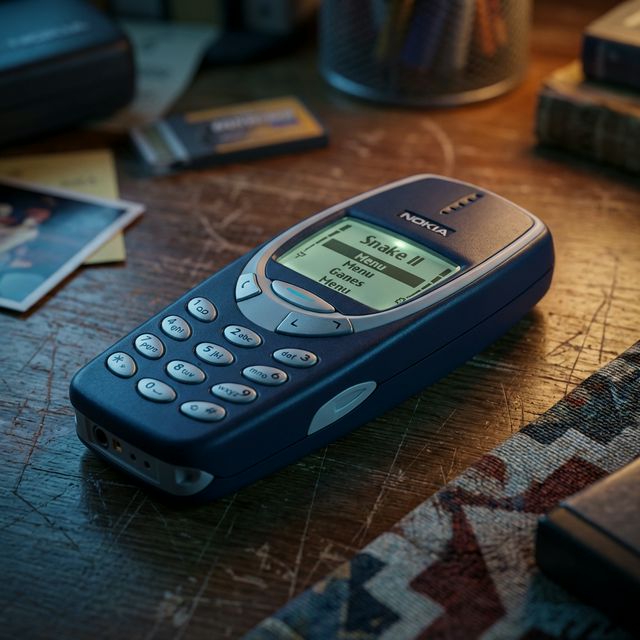
In September 2000, Nokia released a phone that would become a cultural icon: the Nokia 3310. With its chunky plastic body, monochrome screen, and physical keypad, it looked unremarkable. But over the next five years, it sold 126 million units worldwide, becoming one of the best-selling mobile phones in history.
The 3310 wasn't the most advanced phone of its era. It couldn't take photos (the first camera phone, the Sharp J-SH04, launched in 2000). It couldn't access the internet beyond basic WAP. It had 8MB of storage—enough for about 250 SMS messages. Its screen displayed four shades of grey-green.
Yet it achieved something modern smartphones, with their infinite capabilities, rarely do: it became legendary. Not for what it could do, but for what it represented—simplicity, reliability, and an era when phones were tools, not lifestyles.
Twenty-six years later, the Nokia 3310 endures in memes ("Nokia 3310: The only phone that can survive a nuclear war"), nostalgia, and the collective memory of millennials who grew up with it. This is its story.
The Indestructible Brick
Built Like a Tank
The Nokia 3310's reputation for indestructibility isn't just folklore—it's engineering. The phone's polycarbonate shell was thick, robust, and designed to absorb impact. Drop it from waist height? It bounced. Drop it from a second-story window? The battery cover popped off, the battery flew out, but the phone itself? Fine.
Internet memes joke that dropping a Nokia 3310 broke the floor, not the phone—and while hyperbolic, the sentiment reflects real experience. Unlike modern smartphones with fragile glass screens and delicate internals, the 3310 was practically bulletproof.
This durability was intentional. Nokia's design philosophy prioritized reliability over sleekness. The phone had no moving parts beyond buttons, no fragile touchscreen, no exposed ports. It was a sealed, solid brick of functionality.
Battery Life Measured in Days
Modern smartphones die after 12-24 hours of moderate use. The Nokia 3310? Nokia claimed 260 hours (nearly 11 days) of standby time and 4.5 hours of talk time. In practice, users regularly went 3-5 days between charges.
This wasn't magic—it was simplicity. The monochrome screen consumed minimal power. There were no background apps, no push notifications, no GPS draining the battery. The phone did three things: calls, texts, and Snake. That's it.
This battery life created a fundamentally different relationship with your phone. You didn't carry a charger everywhere. You didn't panic when the battery hit 20%. You charged it once or twice a week and forgot about it.
Xpress-on Covers: The Original Phone Customization
Before phone cases, before skins, there were Xpress-on Covers—Nokia's genius marketing innovation. The 3310's front and back covers could be removed and replaced with different colors and designs.
Nokia sold official covers in dozens of colors: neon green, electric blue, hot pink, metallic silver. Third-party manufacturers offered hundreds more—animal prints, sports teams, glitter, glow-in-the-dark.
Changing your phone's look was as simple as popping off the old cover and snapping on a new one. No tools required, no permanent modifications. Your phone could match your mood, outfit, or personality.
This customization created a sense of ownership and identity. Your Nokia 3310 wasn't just a phone—it was your phone, uniquely styled. In an era before smartphones allowed wallpaper customization or app arrangements, Xpress-on Covers were how you expressed yourself.
Snake II: The Game That Defined Mobile Gaming
Simple, Addictive, Perfect
The Nokia 3310 came pre-loaded with Snake II—an evolution of the original Snake that appeared on Nokia phones in 1997. The premise was brutally simple: control a snake, eat dots, grow longer, don't hit walls or your own tail.
No tutorial. No difficulty settings. No microtransactions. Just pure, skill-based gameplay that could be learned in 10 seconds and mastered over months.
Snake II became a cultural phenomenon. Students played it under desks during class. Commuters played it on trains. People played it while waiting for literally anything. It was the perfect time-killer—engaging enough to hold attention, simple enough to play one-handed.
High Scores and Bragging Rights
Snake II tracked your high score, creating competition among friends. "What's your Snake score?" became playground currency. Reaching level 9 was legendary status. Filling the entire screen was mythical.
This was gaming in its purest form—no graphics, no story, no online leaderboards. Just you, the snake, and the relentless pursuit of a higher score.
The Legacy
Snake II proved that mobile gaming didn't need sophisticated graphics or complex mechanics. It needed tight gameplay, instant accessibility, and the ability to play in 30-second bursts.
This philosophy influenced modern mobile gaming—from Angry Birds to Candy Crush, the best mobile games are simple, addictive, and playable anywhere. Snake II was the blueprint.
Ringtones: The Original Personalization
Monophonic Melodies
The Nokia 3310 supported monophonic ringtones—single-note melodies that beeped out recognizable tunes. The phone came with 35 pre-installed ringtones, from classical pieces to Nokia's iconic default tone.
But the real magic was composing your own. The 3310 included a ringtone composer where you could input notes manually, creating custom melodies. Websites and magazines published ringtone codes—sequences of numbers representing notes—that you could type in to recreate popular songs.
Teenagers spent hours composing ringtones: the Mission: Impossible theme, Für Elise, The Simpsons, Star Wars. The results were tinny and primitive, but they were yours.
The Ringtone Economy
By the mid-2000s, ringtones became big business. Premium rate SMS services sold polyphonic and eventually MP3 ringtones for £3-5 each. The global ringtone market peaked at £4.4 billion in 2004.
The Nokia 3310, with its simple monophonic tones, started this trend—proving that people would pay to personalize their phones.
SMS Culture: The Birth of Text Messaging
T9 Predictive Text
Texting on the Nokia 3310 required T9 (Text on 9 keys) predictive text. Each number key represented multiple letters: 2 = ABC, 3 = DEF, etc. Press 4-3-5-5-6 and T9 predicted "hello."
T9 was surprisingly efficient once mastered. Experienced users could text without looking, muscle memory guiding their thumbs. Texting became a skill—fast texters were admired, slow texters mocked.
160-Character Limit
SMS messages were capped at 160 characters. This constraint shaped communication:
- Abbreviations flourished: "u" for "you," "2" for "to," "gr8" for "great"
- Brevity was essential: Get to the point, no rambling
- Creativity thrived: Conveying meaning within limits required skill
This 160-character limit influenced modern communication—Twitter's original 140-character limit was based on SMS constraints.
The Social Impact
SMS transformed social interaction. Before texting, you called or met in person. Texting introduced asynchronous communication—send a message, receive a reply later. No need for real-time conversation.
This was revolutionary for teenagers and introverts. You could communicate without the pressure of phone calls. You could think before responding. You could have multiple conversations simultaneously.
The Nokia 3310, with its affordable texts (10p per message initially, dropping to 5p and eventually unlimited bundles), democratized this communication revolution.
The Design: Form Follows Function
Ergonomics
The Nokia 3310 fit perfectly in your hand. Its curved edges, textured back, and balanced weight made it comfortable to hold for extended calls. The buttons were large, tactile, and satisfying to press—no accidental inputs, no frustrating touchscreen typos.
The phone's size (113mm × 48mm × 22mm) was ideal—small enough to pocket, large enough to use comfortably. Modern smartphones, by comparison, are slabs of glass that require two hands and constant attention.
The Iconic Design Language
The 3310's design was instantly recognizable: rounded rectangular shape, small monochrome screen, large keypad, Nokia logo centered at the top. This design language defined Nokia's identity and influenced mobile phone design for years.
What the Nokia 3310 Represented
1. Phones as Tools, Not Lifestyles
The Nokia 3310 did exactly what it was designed to do: make calls and send texts. It didn't try to be your camera, GPS, music player, web browser, social media hub, or life organizer. It was a phone—and that was enough.
This simplicity created freedom. You weren't tethered to your phone. You didn't check it compulsively. You used it when needed and ignored it otherwise.
2. Reliability Over Features
Modern smartphones offer infinite capabilities—but they crash, freeze, run out of battery, and break when dropped. The Nokia 3310 offered limited capabilities—but it always worked.
This reliability built trust. You knew your Nokia would work when you needed it. No software updates, no bugs, no "have you tried turning it off and on again?"
3. Ownership and Repairability
If your Nokia 3310 broke, you could fix it. Battery died? Buy a new one for £10 and swap it yourself. Screen cracked? Replace it. Buttons worn out? Order replacement parts.
Modern smartphones are sealed, glued, and designed to be unrepairable. The Nokia 3310 was modular, user-serviceable, and built to last.
The 2017 Reboot: Nostalgia Meets Reality
In 2017, HMD Global (which licenses the Nokia brand) released a rebooted Nokia 3310. It featured:
- Color screen (2.4", 320×240 pixels)
- 2MP camera
- Updated Snake game
- Curved design echoing the original
- £49.99 price point
The reboot sold well initially, driven by nostalgia. But it faced a fundamental problem: in 2017, a phone that only makes calls and texts isn't practical. We need smartphones for maps, messaging apps, mobile banking, and countless other tasks.
The 2017 Nokia 3310 proved that you can't go back—only remember fondly.
The Nokia 3310 in Modern Culture
Meme Status
The Nokia 3310 achieved meme immortality:
- "Chuck Norris's phone is a Nokia 3310"
- "Nokia 3310: The only phone that can survive a nuclear war"
- "Dropped my Nokia 3310. RIP floor"
- Images of the 3310 as a weapon, shield, or indestructible object
These memes, while exaggerated, reflect genuine affection and respect for the phone's durability.
Retro Gaming and Collecting
Working Nokia 3310s sell on eBay for £20-60, depending on condition. Boxed, mint-condition units fetch £100+. Collectors seek rare Xpress-on Covers and limited editions.
Some people keep a 3310 as a backup phone—ultimate reliability for emergencies when your smartphone dies.
What We Lost (and Gained)
What We Lost
- Simplicity: Phones that did one thing well, not everything poorly
- Battery life: Days, not hours
- Durability: Phones that survived drops, rain, and abuse
- Repairability: User-serviceable, modular design
- Freedom: Phones you used, not phones that used you
- Tactile feedback: Physical buttons that clicked satisfyingly
What We Gained
- Connectivity: Internet, apps, social media, instant information
- Capabilities: Camera, GPS, music, video, productivity tools
- Convenience: One device replaces dozens
- Communication: WhatsApp, video calls, instant messaging
The trade-off is clear: we gained capabilities but lost simplicity. Whether that's progress depends on your perspective.
Lessons from the Nokia 3310
1. Constraints Foster Creativity
The 3310's limitations—monochonic ringtones, 160-character texts, simple games—forced creativity. Users composed melodies, crafted concise messages, and mastered Snake. Constraints made us more creative, not less.
2. Reliability Builds Trust
The 3310 worked. Always. This reliability created trust and loyalty. Modern tech companies could learn from this—users value dependability over endless features.
3. Simplicity Has Value
A phone that makes calls and sends texts isn't inferior—it's focused. The 3310 proved that doing a few things excellently beats doing everything adequately.
4. Ownership Matters
The ability to repair, customize, and truly own your device creates attachment. Modern devices, designed to be replaced not repaired, lack this emotional connection.
The Nokia 3310 Today
As a Digital Detox Tool
Some people use Nokia 3310s (or similar "dumb phones") for digital detox weekends or holidays. The phone provides essential communication without the distractions of smartphones—no social media, no email, no infinite scrolling.
As a Reminder
The Nokia 3310 reminds us that technology doesn't have to be complicated to be valuable. That durability matters. That battery life is a feature. That sometimes, less really is more.
Resources and Further Reading
- Nokia 3310 (2017 Reboot) - Official Nokia page
- GSMArena: Nokia 3310 Specs - Complete technical specifications
- BBC: Nokia 3310 Returns - Coverage of the 2017 reboot
- The Guardian: The Indestructible Phone - Cultural impact analysis
Final Thoughts: The Phone That Refused to Die
The Nokia 3310 shouldn't be legendary. It was a mid-range phone with basic features, released in an era of rapid technological advancement. It should have been forgotten, replaced, obsolete.
Instead, it became iconic—not despite its simplicity, but because of it.
In an age of smartphones that demand constant attention, die after 12 hours, and shatter when dropped, the Nokia 3310 represents something we've lost: technology that serves us, not the other way around. A phone that worked for days, survived anything, and did exactly what it promised.
We can't go back to the Nokia 3310 era—nor should we. Modern smartphones offer capabilities that genuinely improve our lives. But we can remember what the 3310 taught us: that reliability matters, that simplicity has value, and that sometimes, the best technology is the technology that just works.
The Nokia 3310 didn't just survive drops, rain, and abuse. It survived obsolescence, technological revolutions, and two decades of progress. It lives on in memes, memories, and the collective consciousness of a generation.
Because some things—like indestructible phones and the perfect game of Snake—are simply timeless.
Long live the brick.
Timothy Canon
Tech HistorianAn expert contributor to the Social for Life community, sharing insights on tech and beyond.