Cool Britannia: The 90s UK Pop Culture Explosion

The Decade Britain Got Its Swagger Back
The 1990s saw the UK reclaim its position as a global cultural powerhouse. From the Britpop wars to Girl Power, from "Cool Britannia" to the birth of reality TV—this was the decade that shaped modern British identity.
If the 80s were about excess, the 90s were about authenticity. Or at least, an authentic kind of ironic cool. This is your complete guide to the decade that gave us Oasis, Spice Girls, and the word "innit."
Historical Context: From Recession to Revival
The Early 90s Recession (1990-1993)
The decade opened with economic gloom. The 1990-92 recession hit hard, unemployment rose, and the optimism of the late 80s evaporated. The UK's exit from the ERM (Black Wednesday, 1992) was a political crisis but, ironically, helped economic recovery.
The Cool Britannia Years (1994-1998)
By mid-decade, Britain was buzzing. Tony Blair's 1997 election as Labour PM symbolised generational change. Noel Gallagher visited 10 Downing Street. The Spice Girls met Nelson Mandela. Suddenly, being British was cool again.
The Millennium Approaches (1999-2000)
As the century closed, the Millennium Dome divided opinion, and Y2K fears proved overblown. The 90s confidence was morphing into something digital and unknown. The dial-up internet was clicking and whirring us toward a new world.
📺 The Golden Age of British Television
TFI Friday (1996-2000)
Chris Evans' anarchic Friday night show captured 90s energy perfectly—loud, irreverent, and utterly compelling. It regularly pulled in 5-6 million viewers and made drinking on TV acceptable again.
The Crystal Maze (1990-1995)
Richard O'Brien's labyrinthine game show was compulsive viewing. The Aztec Zone, the Medieval Zone—and that iconic final dome with the gold and silver tickets flying everywhere.
Mr. Bean (1990-1995)
Rowan Atkinson's almost-silent creation became a global phenomenon, proving British comedy could transcend language barriers. Only 15 episodes were made, but the character became immortal.
The Big Breakfast (1992-2002)
The Lock Keeper's Cottage replaced boring morning TV with chaos. Paula Yates, Chris Evans, Denise van Outen, and Johnny Vaughan made waking up fun.
🎬 British Film's Renaissance
Four Weddings and a Funeral (1994)
Richard Curtis' rom-com made $245 million worldwide on a £3 million budget. Hugh Grant became a global star, and the line "Is it still raining? I hadn't noticed" entered the national lexicon.
Trainspotting (1996)
Danny Boyle's adaptation of Irvine Welsh's novel was raw, visceral, and unforgettable. Ewan McGregor's "Choose Life" monologue defined a generation's disillusionment.
The Full Monty (1997)
Sheffield steelworkers becoming strippers shouldn't have worked, but it became the highest-grossing film in UK history at the time. It perfectly captured working-class resilience with humour and heart.
Lock, Stock and Two Smoking Barrels (1998)
Guy Ritchie's debut launched the British gangster genre renaissance and made a star of Jason Statham.
🎵 Britpop: The Cultural War That Defined a Decade
The Battle: Blur vs. Oasis (August 1995)
When Blur's "Country House" and Oasis' "Roll With It" were released on the same day (14 August 1995), it made the evening news. Blur won the battle (#1 vs #2), but Oasis won the war—"(What's the Story) Morning Glory?" sold over 22 million copies.
💿 Definitive Albums
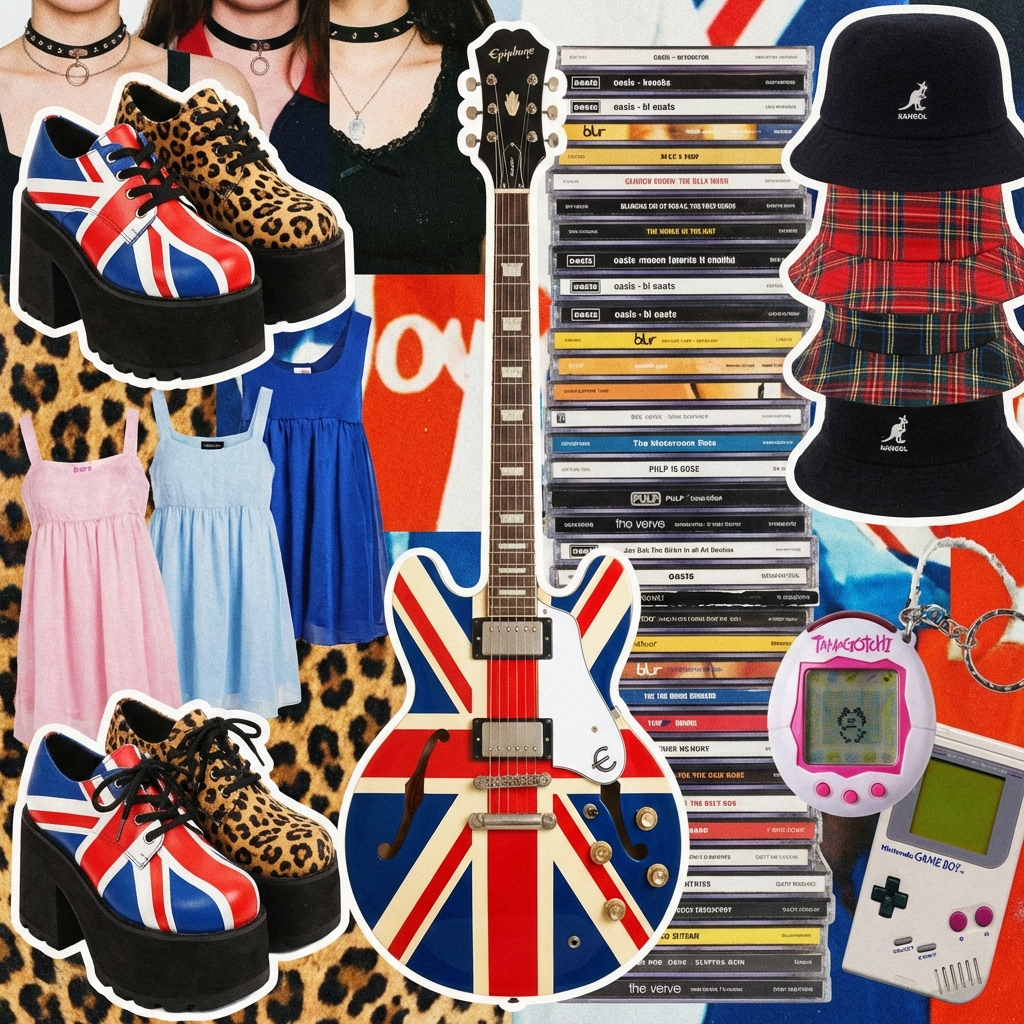
- Oasis - "(What's the Story) Morning Glory?" (1995): The biggest-selling album of the decade in the UK. "Wonderwall" became the karaoke anthem for millions.
- Blur - "Parklife" (1994): Quintessentially British, sarcastically observational. "Girls & Boys" and the title track were everywhere.
- Pulp - "Different Class" (1995): "Common People" is arguably the greatest Britpop song—a class-war anthem wrapped in disco beats.
- Spice Girls - "Spice" (1996): Sold 31 million copies worldwide. "Wannabe" was #1 in 37 countries.
- Radiohead - "OK Computer" (1997): While Britpop partied, Radiohead created a masterpiece about technology and alienation.
- Massive Attack - "Protection" (1994): Bristol's trip-hop sound was the decade's coolest export.
Chart-Topping Hits
- "Wannabe" - Spice Girls (1996): The ultimate Girl Power anthem. 7 weeks at #1.
- "Angels" - Robbie Williams (1997): His solo career-defining ballad. Still sung at every wedding and funeral.
- "Common People" - Pulp (1995): Jarvis Cocker's sardonic masterpiece reached #2 but lives forever.
- "Don't Look Back in Anger" - Oasis (1996): Noel Gallagher's greatest songwriting moment.
- "Firestarter" - The Prodigy (1996): Proof that rave music could dominate the charts. The video was briefly banned.
🧸 The Toys & Tech We Obsessed Over
Tamagotchi (1996)
The digital pet from Japan caused playground hysteria. Keeping your Tamagotchi alive was a 24/7 responsibility. Teachers banned them. Parents hated the beeping.
Pogs (1995-1996)
Cardboard discs with pictures on them. That's it. Yet for 18 months, they were pure currency. The slammer was key.
Game Boy & Pokémon (1998)
Nintendo's portly handheld got a second life when Pokémon Red and Blue launched in Europe in 1999. "Gotta catch 'em all" became a generation's obsession.
🌟 Icons of an Era
Geri Halliwell's Union Jack Dress (1997 BRIT Awards)
THE image of Cool Britannia. A tea towel sewn into a mini-dress. It now resides in a museum.
Kate Moss
The "waif" model defined 90s fashion. Her Calvin Klein campaigns were everywhere. "Heroin chic" was controversial but undeniably influential.
David Beckham
Footballer. Fashion icon. Married to a Spice Girl. Beckham transcended sport to become Brand Britain personified.
👗 The Look
Bucket Hats
Thank Liam Gallagher and the Madchester scene. Paired with an Adidas tracksuit top, this was peak casual.
Platform Shoes
The Spice Girls made them mandatory. Buffalo boots were the most extreme—several inches of rubber sole.
Grunge Crossover
Flannel shirts, ripped jeans, and Doc Martens boots made the jump from Seattle to British high streets.
🚗 The Cars We Drove
Ford Fiesta
The first car for millions of young drivers. Cheap insurance, easy to park, and available in every colour.
Vauxhall Corsa
The boy racer's choice. The culture of "MaxPower" magazine and car modification began here.
🔗 Resources & Where to Learn More
Essential Links
- BBC Archives - Classic 90s TV shows and documentaries
- British Film Institute - Celebrating 90s British cinema
- Official Charts - Every 90s #1 single and album
- British Music Experience - Britpop exhibits and memorabilia
- British Library - 1990s Britain Collection
- Time Out's Guide to Britpop
✨ Experience the 90s Today
1. Britpop Club Nights
Check Events for Britpop tribute nights, Oasis vs Blur DJ battles, and 90s indie discos near you.
2. Visit 90s-Themed Venues
Browse Places for bars and clubs celebrating 90s culture with themed decor and playlists.
3. Start Your Britpop Vinyl Collection
Original pressings of "(What's the Story) Morning Glory?" and "Parklife" are becoming valuable. Check local record shops and online marketplaces.
4. Host a 90s Film Marathon
Four Weddings, Trainspotting, The Full Monty, Lock Stock—schedule a weekend binge with mates.
5. Join a 90s Appreciation Group
Connect with fellow enthusiasts through our Groups page to share memories, playlists, and organize meetups.
Why the 90s Still Matters
The 1990s gave Britain its modern cultural identity. The confidence, the irony, the celebration of working-class voices in art—these all trace back to Cool Britannia.
Today's indie music scene, our obsession with British film, and even the way we talk about class and culture online all owe a debt to the 90s. The decade proved that British culture didn't need to copy America—it could lead.
Want to keep the 90s alive? Join fellow enthusiasts, attend themed events, and celebrate the decade that taught us to wear bucket hats without irony.
Julian Cross
An expert contributor to the Social for Life community, sharing insights on music & gigs and beyond.