

The Art of Knitting: History, Community, and Why Crafting Matters
The Unexpected Renaissance of an Ancient Craft
Something remarkable is happening in cafes, pubs, and living rooms across the UK: young people are picking up knitting needles. What was once dismissed as "grandma's hobby" has become a vibrant, diverse movement embraced by millennials and Gen Z. From Instagram influencers sharing their latest chunky cardigan to mental health professionals recommending it as a mindfulness practice, knitting is experiencing an extraordinary renaissance.
But this isn't just a trend—it's a rediscovery of what humans have always known: creating something with our hands is profoundly satisfying. In an age of fast fashion, digital overwhelm, and social isolation, knitting offers something increasingly rare: tangible progress, creative expression, community connection, and genuine calm.
Whether you've never touched a pair of needles or you're curious about why knitting matters in 2026, this is your comprehensive guide to understanding—and perhaps joining—the modern knitting movement.
From Ancient Craft to Victorian Pastime: A Brief History
Ancient Origins (3rd-5th Century AD)
The earliest evidence of knitting comes from Egypt, dated between the 3rd and 5th centuries AD. The craft spread along trade routes through the Middle East and eventually reached Europe. Remarkably, knitting was originally men's work—professional male knitters dominated the trade for centuries.
Medieval Guilds: When Knitting Was a Serious Business
During the medieval period (1200s-1500s), professional knitters' guilds formed in major European cities like Paris and Florence. Becoming a master knitter was no casual undertaking:
- 6-year apprenticeships were required
- Apprentices had to create a masterpiece—often a complex knitted carpet demonstrating advanced techniques
- Men dominated the profession entirely; knitting was considered skilled craftwork, not domestic labor
This wasn't your cozy fireside hobby—this was serious business.
British Knitting Heritage
Tudor England (1485-1603): Knitted stockings were luxury items worn by the wealthy. Queen Elizabeth I famously wore knitted silk stockings.
Scottish Isle Traditions: The remote islands of Scotland developed distinctive regional patterns still celebrated today:
- Fair Isle knitting: Geometric colorwork from the Shetland Islands
- Aran sweaters: Cable patterns originally from Ireland but adopted across Scotland
- Gansey sweaters: Textured patterns worn by fishermen in Yorkshire and the Northeast
Industrial Revolution (1700s-1800s): The invention of the knitting machine in 1589 gradually made hand-knitting less economically necessary, though it persisted as a domestic skill.
Victorian Era: Knitting became firmly associated with women's domestic work and middle-class leisure activity.
Wars and Wool: The 20th Century
World War I & II: The "Knit for Victory" campaigns mobilized civilians—especially women—to knit socks, balaclavas, scarves, and other items for soldiers. Knitting circles became both productive work and morale-boosting community gatherings.
This wartime knitting wasn't just symbolic; it was essential. Soldiers needed warm, durable woolens, and home-front knitters provided them by the millions.
The Modern Revival (1990s-Present)
By the late 20th century, knitting had largely faded from mainstream culture—seen as outdated, uncool, and irrelevant.
Then something shifted:
The "Stitch 'n Bitch" Movement (2003): Debbie Stoller published Stitch 'n Bitch: The Knitter's Handbook, reclaiming knitting as feminist, creative, and rebellious. The title itself was provocative—knitting groups in pubs, not parlors.
The Digital Age: Ravelry launched in 2007, creating a massive online community (now 9+ million members). Instagram, YouTube, and podcasts brought knitting to new audiences.
Slow Fashion & Sustainability: Growing awareness of fast fashion's environmental and ethical costs made handmade, durable knitting appealing.
Mental Health Awareness: Research demonstrating knitting's therapeutic benefits aligned with growing interest in mindfulness and self-care.
Today, knitting is vibrant, diverse, and deeply relevant.
Why Knitting Matters: The Science and Soul of Stitches
Mental Health Benefits: More Than Just Relaxation
Meditative Repetition: The rhythmic, repetitive movements of knitting activate the same brain responses as meditation. The click of needles, the flow of yarn through fingers—it's hypnotic in the best way.
Mindfulness Practice: Knitting demands presence. You must focus on each stitch, count rows, follow patterns. This pulls you out of anxious thoughts about the future or rumination about the past and grounds you in the present moment.
Stress Reduction: Studies show knitting lowers cortisol (stress hormone) and heart rate. A 2013 survey found 81% of knitters felt happier after knitting. That's comparable to the effects of yoga and meditation.
Sense of Accomplishment: In a world where work often feels intangible (emails, spreadsheets, endless meetings), knitting provides visible, tangible progress. You can see the scarf growing, the sock taking shape. This concrete achievement boosts mood and self-esteem.
Therapeutic Use: Therapists increasingly recommend knitting for anxiety and depression. Some hospitals offer knitting programs for patients dealing with chronic pain, PTSD, and other conditions.
Neurological Benefits: Keeping Your Brain Sharp
Brain Stimulation: Reading patterns, counting stitches, calculating increases and decreases—knitting engages multiple cognitive processes simultaneously.
Fine Motor Skills: The precise hand movements required maintain and improve hand-eye coordination.
Preventing Cognitive Decline: Research suggests crafts like knitting may help prevent or slow dementia and Alzheimer's in older adults by keeping the brain active and engaged.
Social Connection: The Heart of Knitting Culture
Knitting Groups—The New Social Hub:
In an age of loneliness and digital isolation, knitting groups offer something precious: genuine human connection.
- Stitch and Bitch groups: Informal gatherings in pubs, cafes, and community centers
- Library knitting circles: Free, welcoming, open to all
- Yarn shop knit-alongs: Weekly meetups at local yarn stores
- Online communities: Ravelry, Instagram, Facebook groups connecting knitters worldwide
Why Knitting Groups Work:
- Non-threatening social setting: Hands are busy, so there's less awkward eye contact or pressure to constantly talk
- Intergenerational mixing: Grandmothers knit alongside twenty-somethings, sharing skills and stories
- Skill sharing: Experienced knitters help beginners; everyone learns
- Combating loneliness: Regular, scheduled social interaction builds friendships and community
One knitter described her weekly pub knitting group: "It's the highlight of my week. We laugh, we support each other through life stuff, and oh, we also knit. But honestly, the knitting is almost secondary to the friendship."
Getting Started: A Complete Beginner's Guide
What You Need (Budget: £15-20)
Needles:
- Recommended for beginners: Bamboo or wooden needles, size 5mm (UK 6, US 8)
- Why bamboo? Slightly grippy texture prevents stitches from sliding off
Yarn:
- Weight: Chunky or aran weight (thicker = easier to see stitches)
- Color: Light color (cream, pale yellow, light gray) so you can see your work
- Fiber: 100% wool or acrylic (acrylic is cheaper and machine-washable; wool feels nicer)
- Suggested brands: Stylecraft Special DK (budget), Rowan (mid-range), Malabrigo (luxury)
Pattern:
- First project: Dishcloth or simple scarf
- Where to find: Free patterns on Ravelry.com, YouTube tutorials
The Four Essential Skills
Every knitter must learn these basics:
1. Cast On: Getting stitches onto your needle (start of any project)
2. Knit Stitch: The most basic stitch—master this and you can make scarves, blankets, and more
3. Purl Stitch: The reverse of a knit stitch; combining knit and purl creates most patterns
4. Cast Off: Finishing your work so it doesn't unravel
Learning curve: Expect awkwardness for the first few hours. By your third session, muscle memory kicks in. Within a few weeks, you'll knit while watching TV without looking at your hands.
Learning Resources (Mostly Free!)
YouTube Channels:
- Very Pink Knits: Crystal-clear tutorials, highly recommended
- Sheep & Stitch: Beginner-friendly, encouraging tone
- 10 Rows a Day: Quick tips and techniques
Websites:
- Ravelry.com: 100,000+ free patterns, community forums, project tracking (free account)
- PurlSoho.com: Beautiful patterns and excellent tutorials
Books:
- Stitch 'n Bitch by Debbie Stoller (fun, accessible, great for beginners)
- The Knitter's Bible (comprehensive reference guide)
- Knitting Without Tears by Elizabeth Zimmermann (classic, philosophical approach)
In-Person Classes:
- Local yarn shops offer beginner workshops (£20-40 for 2-3 hours)
- Many libraries host free knitting groups where experienced knitters help newcomers
Your First Project: The Magic Dishcloth
Why a dishcloth?
- Quick: Finishes in 2-3 hours
- Forgiving: Mistakes don't matter (it's just a dishcloth!)
- Useful: Practical item you'll actually use
- Confidence boost: Immediate sense of accomplishment
Simple pattern:
- Cast on 30 stitches
- Knit every row (this creates "garter stitch")
- Continue until square (about 8-10 inches)
- Cast off
Congratulations—you're officially a knitter.
Common Beginner Mistakes (And Why They're Normal)
Dropping stitches: Happens to everyone. YouTube has tutorials on picking them back up.
Uneven tension: Your first scarf will be wonky—tighter at the beginning, looser later. This is normal; tension evens out with practice.
Adding or losing stitches: Accidentally increasing or decreasing stitch count. Solution: Use stitch markers and count regularly.
Comparison trap: Don't compare your first project to Instagram perfection. Every expert knitter made ugly, mishapen scarves when they started.
UK Knitting Resources: Where to Shop and Connect
Independent Yarn Shops (Support Local!)
Loop (London & Leeds):
- Curated selection of beautiful yarns
- Excellent classes and workshops
- Knowledgeable, helpful staff
- Website: loopknitlounge.com
Purlescence (Manchester):
- Cozy, welcoming shop
- Specializes in indie dyers and unique yarns
- Regular social knitting evenings
The Woolly Brew (Online, Scotland-based):
- Fantastic online shop with fair prices
- Thoughtful yarn reviews
- Hosts online knit-alongs
Finding your local yarn shop:
- Google "[your city] yarn shop"
- Check Ravelry's "Local Yarn Stores" directory
- Ask in local Facebook crafting groups
Online Retailers (Budget-Friendly Options)
LoveCrafts (UK-based):
- Massive selection of yarns and patterns
- Frequent sales and discounts
- Good for budget-conscious knitters
Wool Warehouse:
- Affordable prices, fast UK shipping
- Wide range of brands
- Helpful customer service
Etsy:
- Independent dyers selling hand-dyed yarns
- Often one-of-a-kind colorways
- Support small businesses
Budget Shopping Tips
Charity shops: Second-hand yarn and needles (often from inherited stashes) Facebook Marketplace: Knitters "destashing" (selling excess yarn) January/July sales: Major yarn shops have semi-annual sales Join local groups: Knitters often give away leftover yarn
Knitting for Sustainability: Slow Fashion Revolution
The Problem with Fast Fashion
The fashion industry is the second-largest polluter globally. Cheap clothing is made in exploitative conditions, worn briefly, and discarded. The average UK consumer buys 27kg of clothing per year; much ends up in landfills.
How Knitting Fights Back
Understanding Garment Creation: When you knit a sweater, you understand the time, skill, and materials involved. A hand-knit sweater might take 40-80 hours. This fundamentally changes how you value clothing.
Slow Fashion Mindset:
- Buy less, choose well, make it last (Vivienne Westwood's mantra)
- Handmade items are cherished, repaired, and kept for years or decades
- You develop a wardrobe of beloved pieces, not disposable trends
Eco-Friendly Yarn Choices:
- Organic wool: Ethically raised sheep, no harmful chemicals
- Bamboo & hemp: Sustainable plant-based fibers
- Recycled materials: Yarn made from recycled cotton or plastic bottles
Repair Culture:
- Darning: Mend holes in socks and sweaters
- Unraveling old sweaters: Reuse the yarn for new projects
- Visible mending: Japanese boro and sashiko techniques make repairs beautiful
Modern Knitting Culture: Digital Communities and New Aesthetics
Instagram Knitting (#KnittersOfInstagram)
Over 10 million posts under #knitting and related hashtags showcase:
- Contemporary patterns: Oversized sweaters, colorwork, modern silhouettes
- Indie designers: Petiteknit (Danish), Wool and the Gang (UK), Brooklyn Tweed (US)
- Diversity: Knitters of all ages, genders, backgrounds sharing their work
Popular accounts to follow:
- @petiteknit (minimalist Scandi style)
- @wool_and_the_gang (chunky, modern)
- @stephknits (British knitwear designer)
Podcasts for Knitters
Woolful: Interviews with fiber artists and makers Fruity Knitting: Knitting travels, techniques, beautiful videography While She Naps: Balancing knitting with busy life as a parent
Knit-Alongs (KALs): Group Projects
KALs are group events where knitters make the same pattern simultaneously:
- Structure: Set start date, milestones, finish deadline
- Community: Share progress on Instagram/Ravelry, encourage each other
- Accountability: Deadlines motivate completion
- Popular KALs: Tin Can Knits' "Fall Fest," Stephen West's annual MKAL (Mystery Knit-Along)
Giving Back: Charity Knitting in the UK
Knitting with Purpose
Many knitters donate their work to those in need:
Premature Baby Hats:
- Hospitals gratefully accept tiny hats for NICU babies
- Contact your local maternity ward to ask about needs
Blankets for the Homeless:
- Charities like Knit for Peace organize donations
- Warm blankets provide comfort and dignity
Chemo Caps:
- Soft hats for cancer patients experiencing hair loss
- Many hospitals have programs accepting donations
Twiddle Muffs:
- Sensory items for dementia patients
- Textured surfaces (buttons, ribbons, pockets) provide comfort and stimulation
UK Charities Accepting Hand-Knits
Knit for Peace:
- Blankets, clothing, baby items for refugees and people in crisis
- Website: knitforpeace.org.uk
Loving Hands:
- Baby items for hospitals and neonatal units
- Blankets for homeless charities
Age UK:
- Blankets and warm items for elderly people in need
Benefits of charity knitting:
- Your hobby has meaningful impact
- Practice skills while helping others
- Connect with like-minded knitters
Beyond Basics: Growing as a Knitter
Techniques to Explore
Colorwork:
- Fair Isle: Traditional two-color patterns (geometric designs)
- Intarsia: Larger blocks of color (think argyle or picture knits)
Lace Knitting:
- Delicate, open-work patterns
- Creates heirloom-quality shawls and scarves
Cable Knitting:
- Textured, rope-like patterns
- Traditional Aran sweaters feature complex cable designs
Sock Knitting:
- Uses circular needles or double-pointed needles
- Learning to "turn a heel" is a knitter's rite of passage
The Ultimate Project: Your First Sweater
For many knitters, completing a wearable sweater is the holy grail:
Time investment: 40-80+ hours typical
Skills required: Following complex patterns, shaping, seaming
Satisfaction level: Off the charts
Tips for success:
- Choose a simple pattern first (Flax or Harvest by Tin Can Knits are beginner-friendly)
- Measure carefully: Gauge swatch is essential (more important than for scarves!)
- Join a KAL: Community support helps you finish
When you wear a sweater you knit yourself—that you chose the pattern for, selected the yarn, spent weeks creating stitch by stitch—it feels magical.
UK Knitting Festivals and Events
Edinburgh Yarn Festival (March)
The UK's largest yarn festival:
- Hundreds of indie dyers and yarn vendors
- Classes and workshops with celebrity knitters
- Fiber enthusiasts travel from across Europe
- A true pilgrimage for serious knitters
Yarndale (Skipton, September)
Held in the Yorkshire Dales:
- Sheep shows and sheepdog demonstrations
- Wool, yarn, and fiber marketplace
- Family-friendly atmosphere
- Celebrates British wool heritage
Local Yarn Crawls
Many regions organize "yarn crawls"—scavenger hunts visiting multiple yarn shops:
- Special discounts and exclusive yarns
- Prizes for completing the crawl
- Fun way to discover new shops
- Usually held spring and autumn
Starting Your Knitting Journey: A 6-Month Roadmap
Week 1: Gather Supplies
- Visit local yarn shop or order online
- Buy needles (5mm bamboo) and chunky yarn
- Watch "How to Cast On" tutorial
Week 2-3: Learn Knit Stitch
- Practice casting on repeatedly until comfortable
- Knit 10+ rows of practice swatch
- Don't worry about mistakes!
Week 4: First Project
- Start dishcloth
- Focus on consistent tension
- Celebrate finishing (even if wonky!)
Month 2: Expand Skills
- Learn purl stitch
- Try ribbing pattern (knit 2, purl 2)
- Start scarf project
Month 3: Join Community
- Find local knitting group (Meetup, library, yarn shop)
- Create Ravelry account
- Share progress on Instagram (if comfortable)
Month 6: First Wearable
- Knit a hat, cowl, or simple shawl
- Consider starting a sweater if feeling ambitious
- Reflect on how far you've come
Why Knitting Is for Everyone
Breaking Stereotypes
Not just for grandmas: While many grandmothers are excellent knitters, the craft spans all ages. Gen Z knitters are particularly active online.
All genders knit: Men's knitting groups are growing. Historically, men dominated professional knitting. There's nothing inherently feminine about string and sticks.
All abilities welcome: Adaptive tools and techniques make knitting accessible for various disabilities. Ergonomic needles, assistive devices, and supportive communities help everyone participate.
Accessibility and Inclusivity
Low-cost entry: £15-20 gets you started
Learn at your own pace: No deadlines, no pressure
Portable: Knit anywhere—trains, waiting rooms, parks
Year-round craft: Cozy in winter, linen projects in summer
The Deeper Meaning
Knitting connects us to:
- History: We join centuries of knitters before us
- Each other: Community across age, culture, and background
- Ourselves: Mindfulness, creativity, accomplishment
- The Earth: Choosing sustainable fibers and slow fashion
In our fast-paced, disposable, digital world, knitting offers an antidote: slow, deliberate, lasting, human.
Conclusion: Your First Stitch Starts Today
Every expert knitter—every designer on Instagram, every yarn shop owner, every grandmother with astonishing skills—started exactly where you are now: holding needles awkwardly, confused by tension, unsure if they could do it.
They took the first stitch.
Then another.
And another.
Knitting teaches patience, persistence, and the profound satisfaction of creating something from almost nothing. It connects you to tradition, to community, to your own hands' capability.
The question isn't whether you'll be "good at it" immediately (you won't—no one is). The question is: Are you curious? Would you like to try?
If the answer is yes, then you're already a knitter.
All you need to do is cast on.
References and Resources
Essential Websites
Ravelry.com
- World's largest knitting community (9+ million members)
- 100,000+ free patterns
- Forums, pattern database, project tracking
- Completely free to join
PurlSoho.com
- Beautiful free patterns
- Excellent tutorials
- Aesthetic inspiration
Knitty.com
- Free online knitting magazine
- Patterns, articles, techniques
YouTube Channels (Free Tutorials)
- Very Pink Knits: Clear, detailed technique videos
- Sheep & Stitch: Beginner-friendly patterns and tutorials
- 10 Rows a Day: Quick tips and motivation
Books
For Beginners:
- Stitch 'n Bitch by Debbie Stoller
- The Knitter's Book of Knowledge by Debbie Bliss
For Inspiration:
- Knitting Without Tears by Elizabeth Zimmermann
- The Knitter's Handy Book of Patterns by Ann Budd
UK Yarn Shops
Loop (London/Leeds): loopknitlounge.com
Purlescence (Manchester): purlescence.co.uk
The Woolly Brew (Online): thewoollybrewstore.com
LoveCrafts (Online): lovecrafts.com
Charity Organizations
Knit for Peace: knitforpeace.org.uk
Loving Hands: lovinghandscrochet.co.uk
Age UK: ageuk.org.uk (search "knitting")
Social Media
Instagram hashtags:
- #knittersofinstagram
- #knitting
- #knittingaddict
- #handknit
Reddit:
- r/knitting (800,000+ members)
Events
Edinburgh Yarn Festival: edinburghyarnfestival.com
Yarndale: yarndale.co.uk
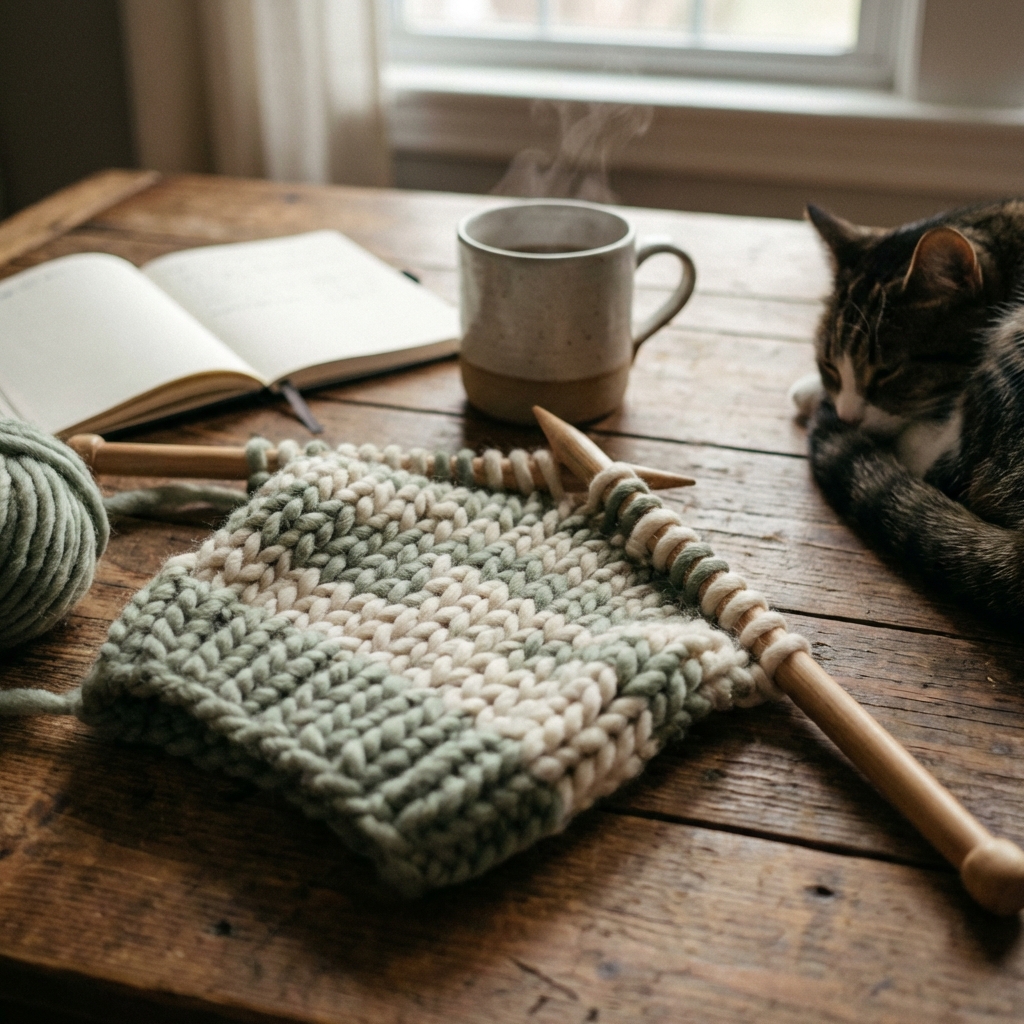
Featured Image Suggestion: Cozy scene of hands knitting with colorful yarn, natural window light, cup of tea nearby, balls of yarn in soft focus. Warm, inviting, peaceful atmosphere.
Ruth Naomi
Community & Lifestyle LeadRuth is passionate about uncovering the stories that connect communities and celebrate local culture.

